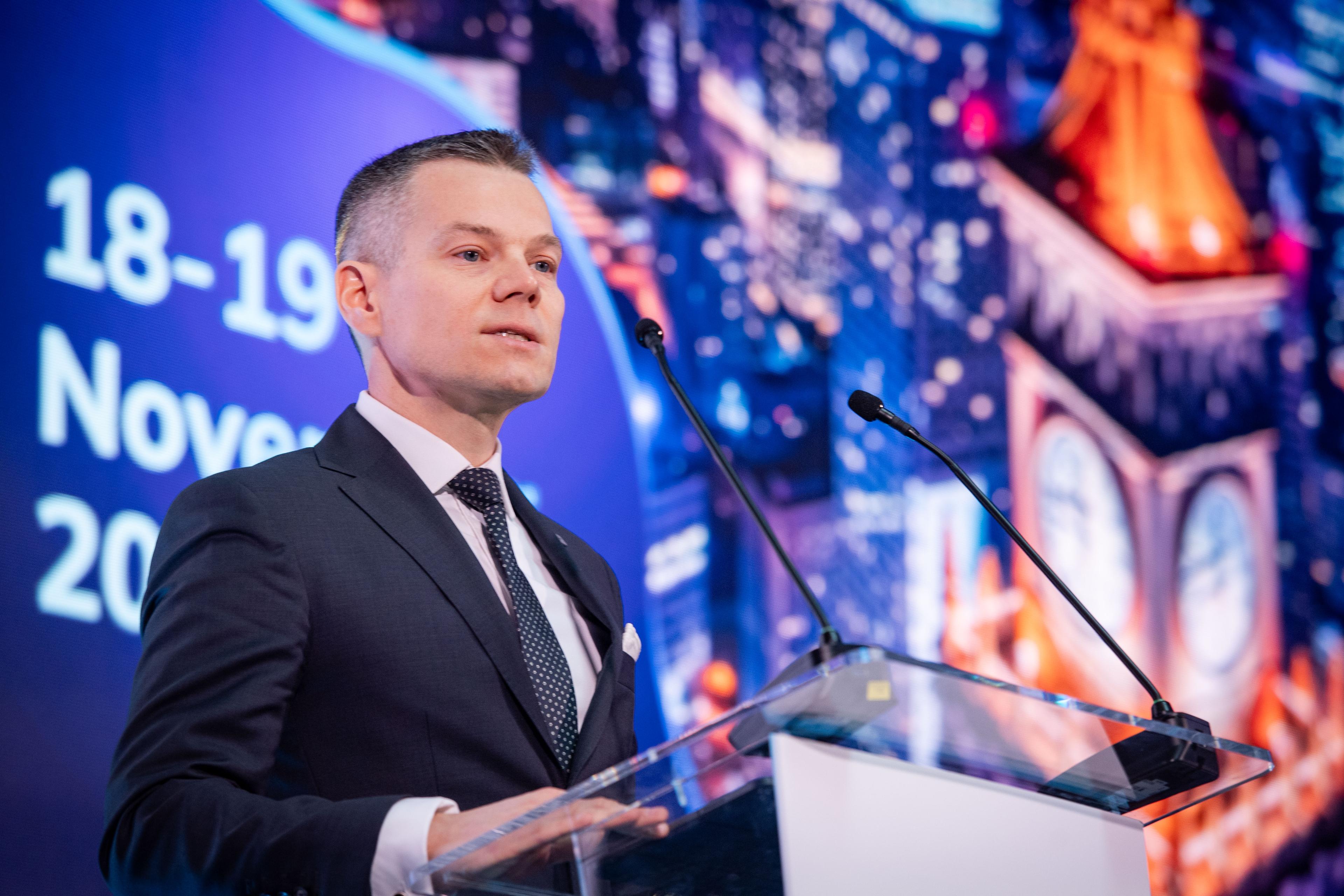
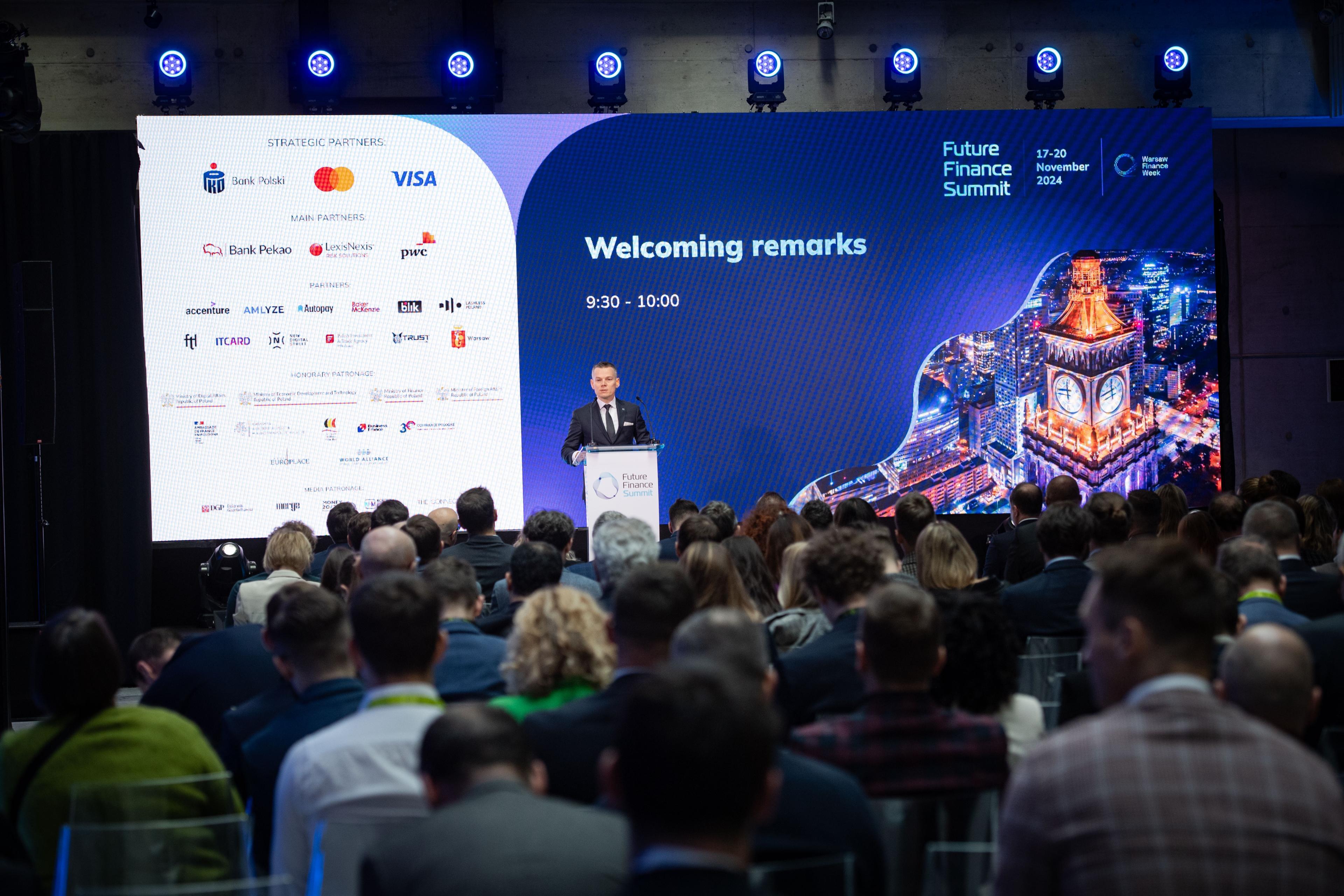
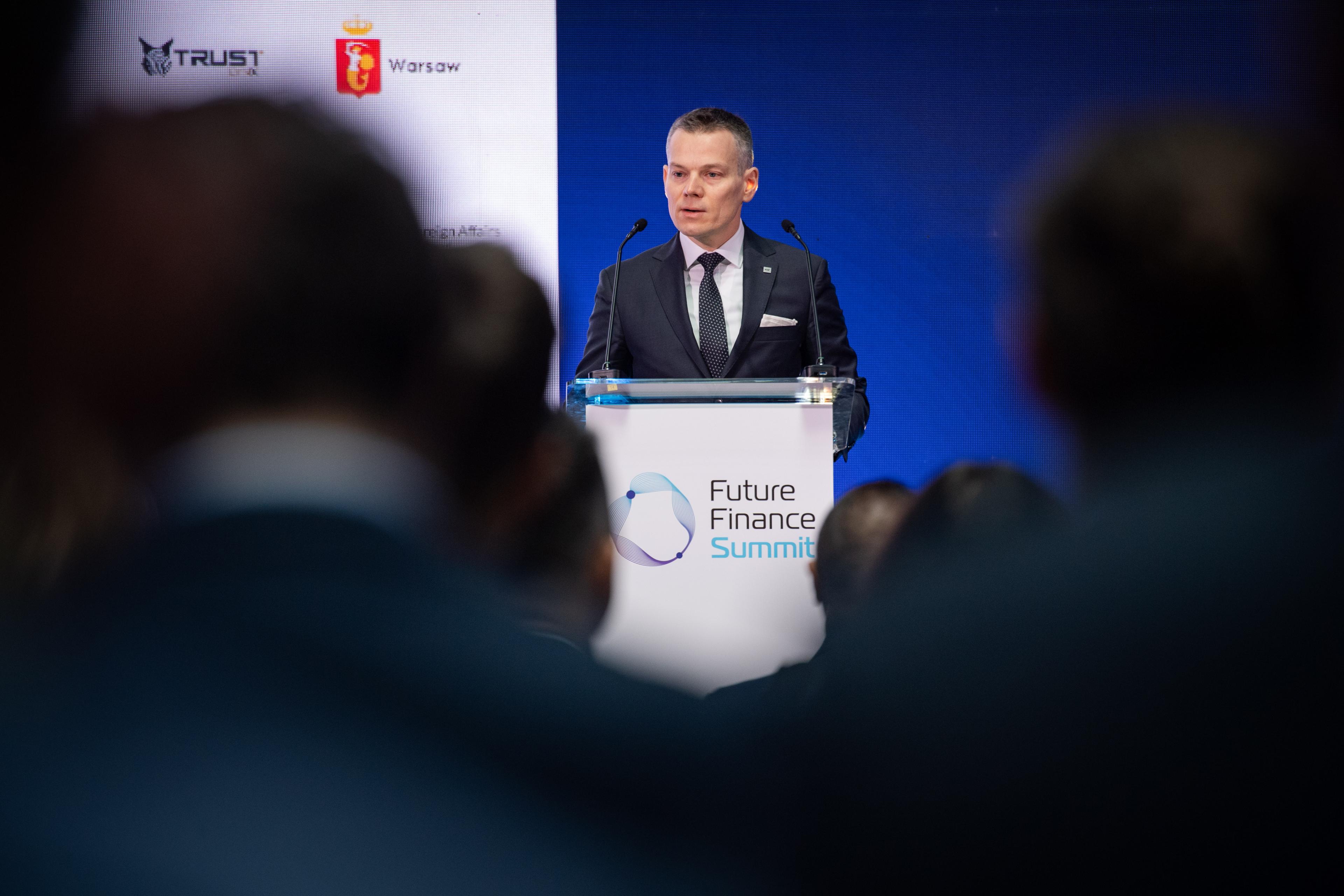
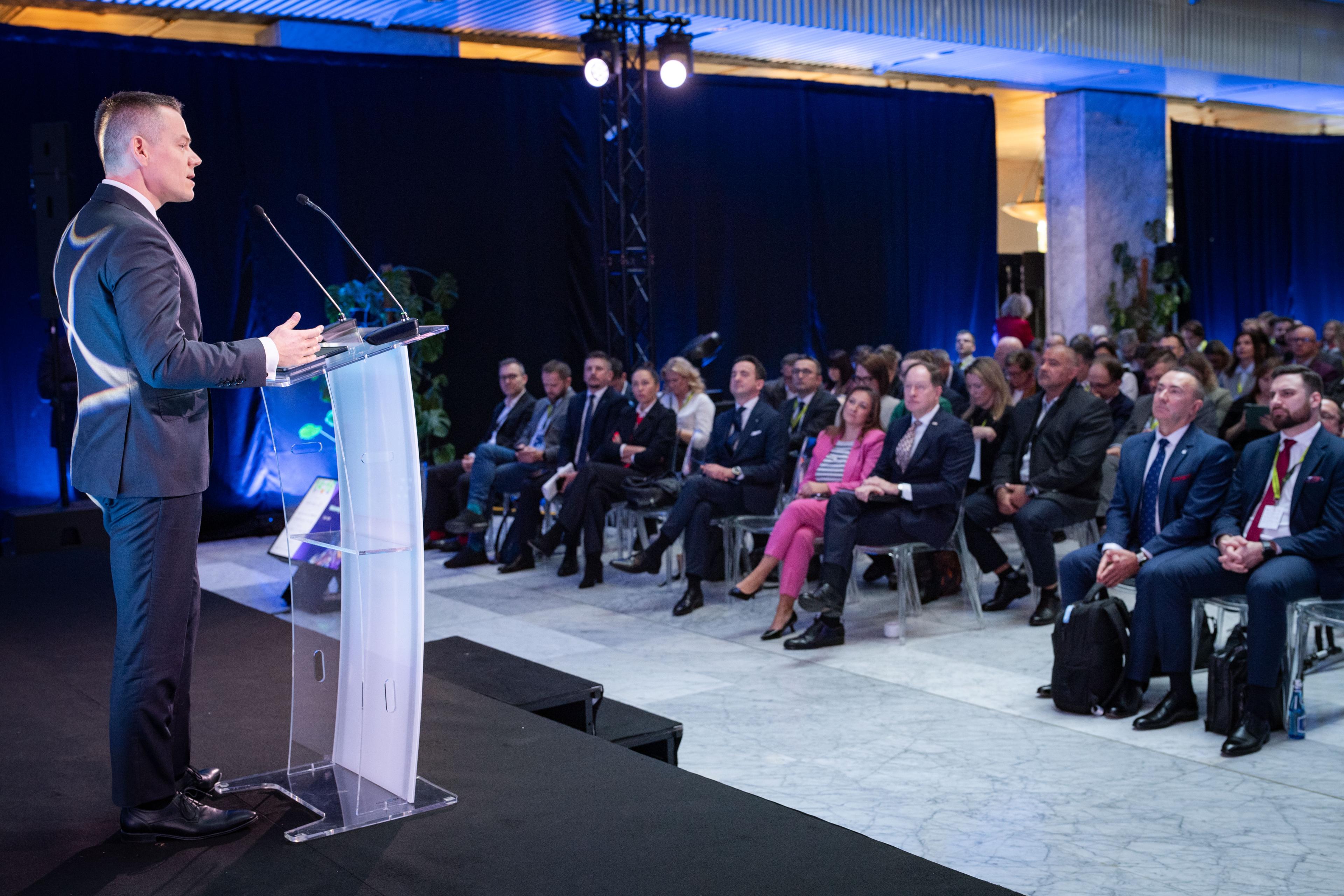
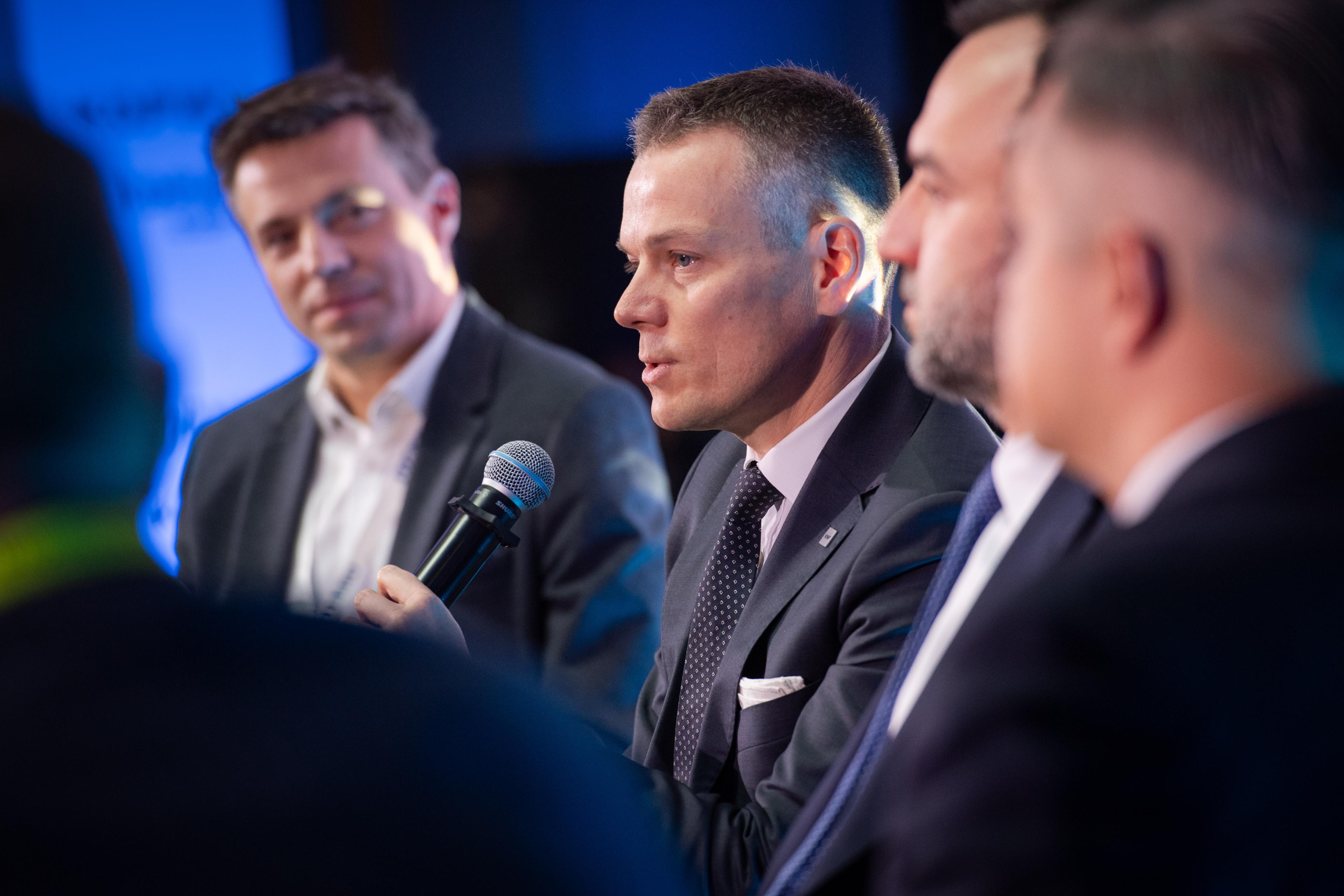
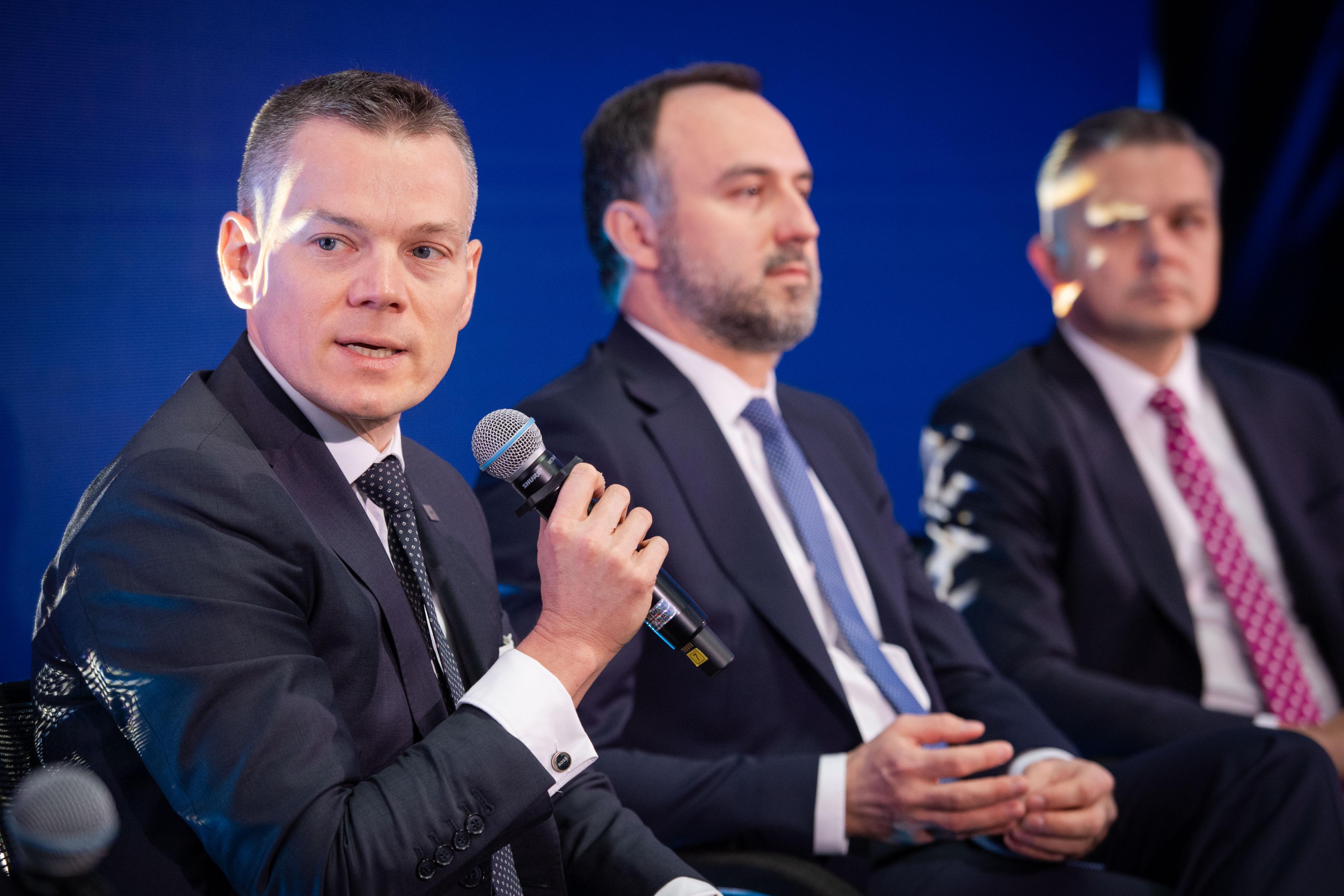
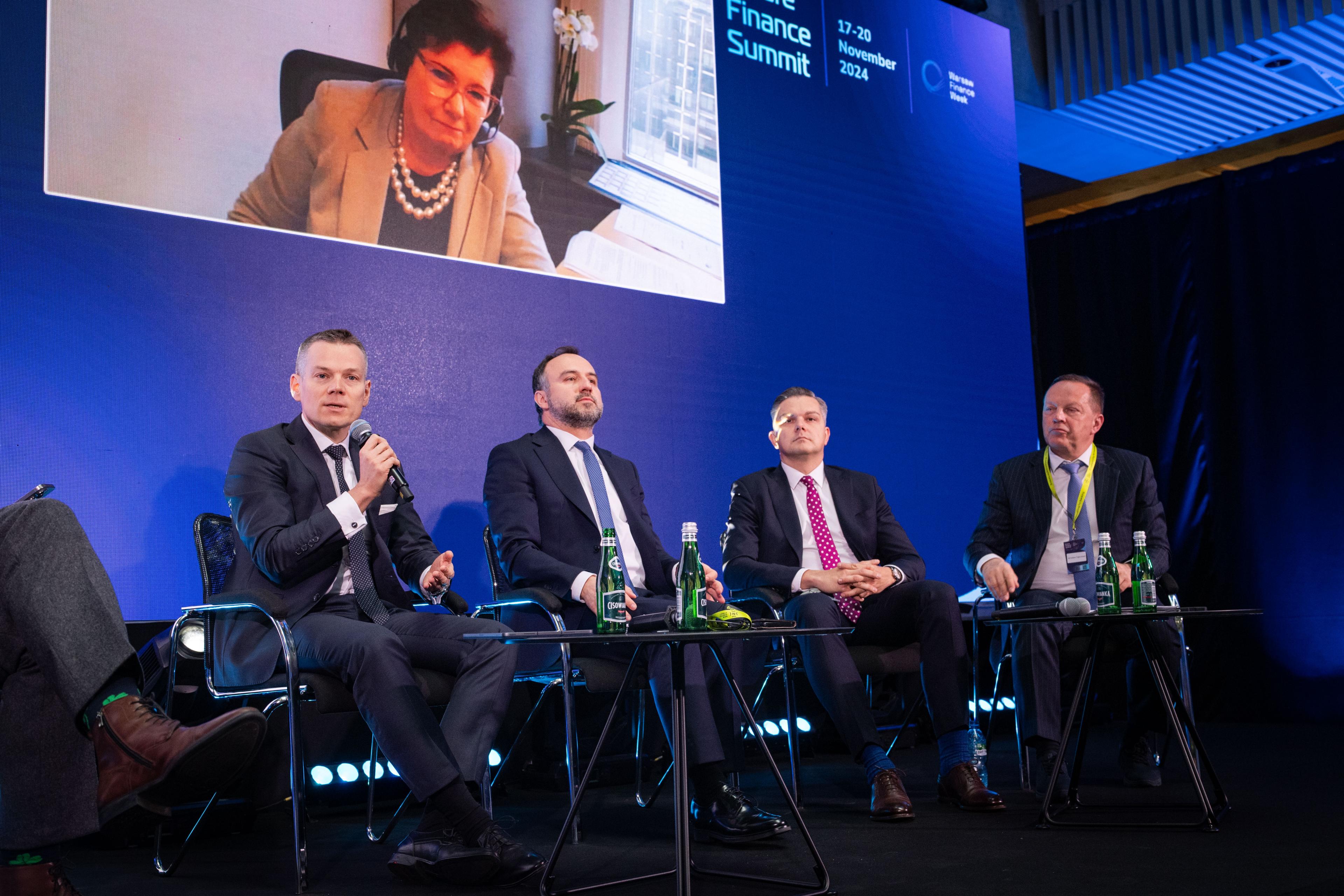
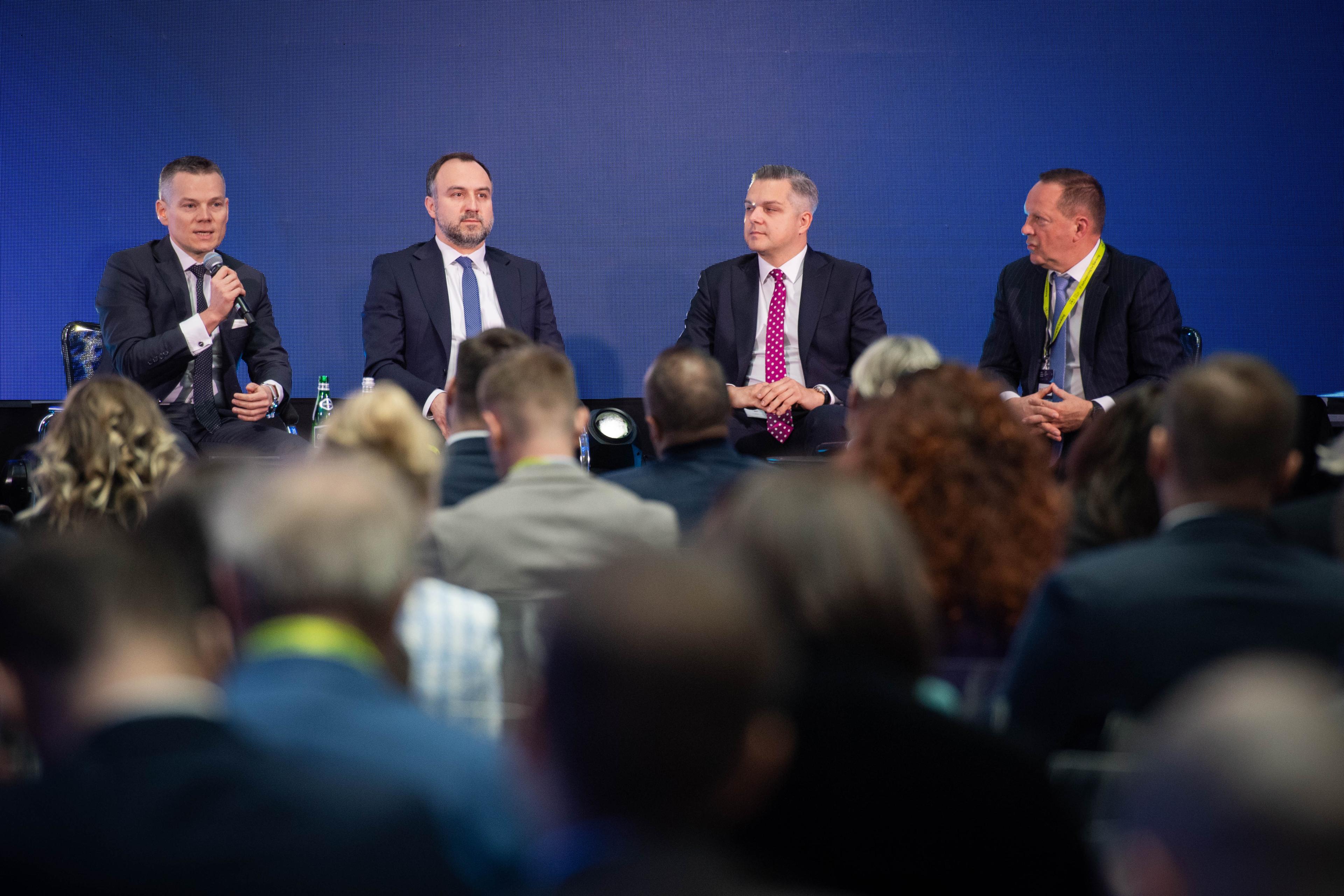
Jacek Jastrzębski spoke at the Future Finance Summit
Jacek Jastrzębski, Chair of the KNF, delivered opening remarks at the Future Finance Summit – Warsaw Finance Week, organised by Future Finance Poland. We invite the readers to see the full speech.
Jacek Jastrzębski also participated in a discussion panel: ‘Polish Presidency in the context of Ursula von der Leyen’s political guidelines for the new term of the European Commission for the years 2024–2029’.
Key points of the Chair’s speech during the panel:
On deregulation:
- The leading role in setting the directions of the upcoming Polish Presidency of the Council of the European Union in relation to financial markets is played by the Ministry of Finance; The UKNF offers full support to the Ministry of Finance in regard to the preparation for and further running of the Presidency.
- In the light of the upcoming Polish Presidency, a very intense open dialogue has taken place recently between the financial sector and public institutions. The meetings are held under the auspices of the Ministry of Finance. The UKNF is honoured to participate in this work. The exercise of identifying ‘bottlenecks’ in the Polish capital market is done on an ongoing basis.
- The Ministry of Finance is the market regulator, but the financial supervisor is also a regulator to a certain extent, as it is close to the market and, in a sense, one of the first to apply the policies created at the EU and national levels.’ It’s a niche in which the UKNF can support the Ministry of Finance.
- The UKNF has unique experience in applying the legislation on financial market. The plethora of policies or growing waves of new, more and more detailed regulations, are not only problematic for financial market participants but also for the financial supervisor. As regards the area delineated by the Ministry of Finance according to which one of the main themes of the Polish Presidency should be deregulation and simplification of policies, the financial supervisor declares its support and willingness to cooperate.
- A conversation about the possibility of ‘decreeing’ deregulation is a difficult one. As a matter of fact, the idea involves a contradiction, as after so many years of rapid policy creation, introducing new policies to deregulate what has already been regulated is impossible. It’s not going to work, or it certainly cannot be done safely. Deregulation is a way of thinking or a different culture of doing things. One possible direction is to confer broader powers on financial supervision authorities to exercise discretion in their decisions. This would allow for creating policies that are less detailed.
- The issue of deregulation should be seen in the context of creating a risk culture. Deregulation cannot be achieved without an honest discussion about the level of risk acceptance. Excessive regulation means striving for utopia to create a financial market that is free from risks to market participants. If we want to create a risk-free market, we have to create a market without rates of return. Let’s face it: the financial market entails risk. It’s important that risk is understood properly, that is as risk of success or failure in the projects that involve higher risk. Higher risk should be linked to the profile of the business investors want to finance, not to the acceptance of malpractices they don’t have to and shouldn’t accept, such as mismanagement, fraud, misselling or other similar practices. However, we mustn’t create an illusion that with regulatory policies we can create a risk-free market. There has to be a consensus between the general public and the institutions responsible for the financial market that if we want innovativeness, we have to accept a higher level of risk, since innovativeness per se involves higher risk.
- The key to deregulation is do the homework of telling ourselves very clearly that the financial market, which is by definition supposed to offer various rates of return for various asset categories, must also entail various levels of risk for various assets. One has to come to terms with this risk by properly diversifying the portfolio or selecting a time horizon which is appropriate to one’s individual needs.
- An important task in which the financial supervisor has a big role to play is to join the debate on market integration. A major obstacle that still remains here is the incompatibility of supervisory practices across countries as well as all kinds of legal and supervisory challenges related to the conduct of business, for example on a cross-border basis or through branches. This is one of those recurrent topics, and perhaps one will have to face it eventually.
- It’s necessary to review the division of tasks between competent authorities in relation to business activities carried out on a cross-border basis or through a branch. A certain form of regulatory arbitrage exists here, and this can be problematic and cause interruption of the smooth functioning of the common market, an issue that can be solved without structural reforms. Regulatory arbitrage expresses itself in the fact that entities enter the Polish market using the licensing path in other jurisdictions, where these other jurisdictions, by their very premise, build their business model based on slightly less strict requirements, which in turn relates to the fact that in general they license entities ‘for foreign markets’, so their sensitivity to certain issues may be lower. This is a topic that should be addressed, in the first place, by competent institutions at the EU level – perhaps it’s an area that should be highlighted before moving on to the next level, aiming at ‘hard’ harmonisation or integration of supervision.
- So before we move to the discussion on the integration of financial supervision or integration of the market in the institutional sense, maybe we should give another chance to the initiatives aimed at ensuring the convergence of supervisory practices?
On the Draghi Report and the achievements of the Polish economy:
- We often hear in the public debate that the Draghi Report or other similar reports do not adequately take into account the story of success and experience of the countries in our region which can be proud of the spectacular economic growth such as the recent growth in Poland; perhaps when trying to understand why our success is not emphasised enough, we should also take a look at ourselves. We should be open and bold: we should be humble and show respect for others but we should talk about our success and achievements without feeling self-conscious.
- The payments sector and cybersecurity are definitely Polish exports we should be proud of; we should learn to speak about them loud and clear in order to break through, to promote and sell these skills; we can afford it to overcome certain hang-ups which may have been the unnecessary remnants of the past and be more eloquent about what have achieved.
The development of the Polish payment system is an absolutely spectacular achievement; Poland, the Polish financial supervisor, and the Polish regulator were technology-neutral before technology neutrality became trendy and before people began using this term.
More details about the events: https://futurefinancepoland.com/warsaw-finance-week/