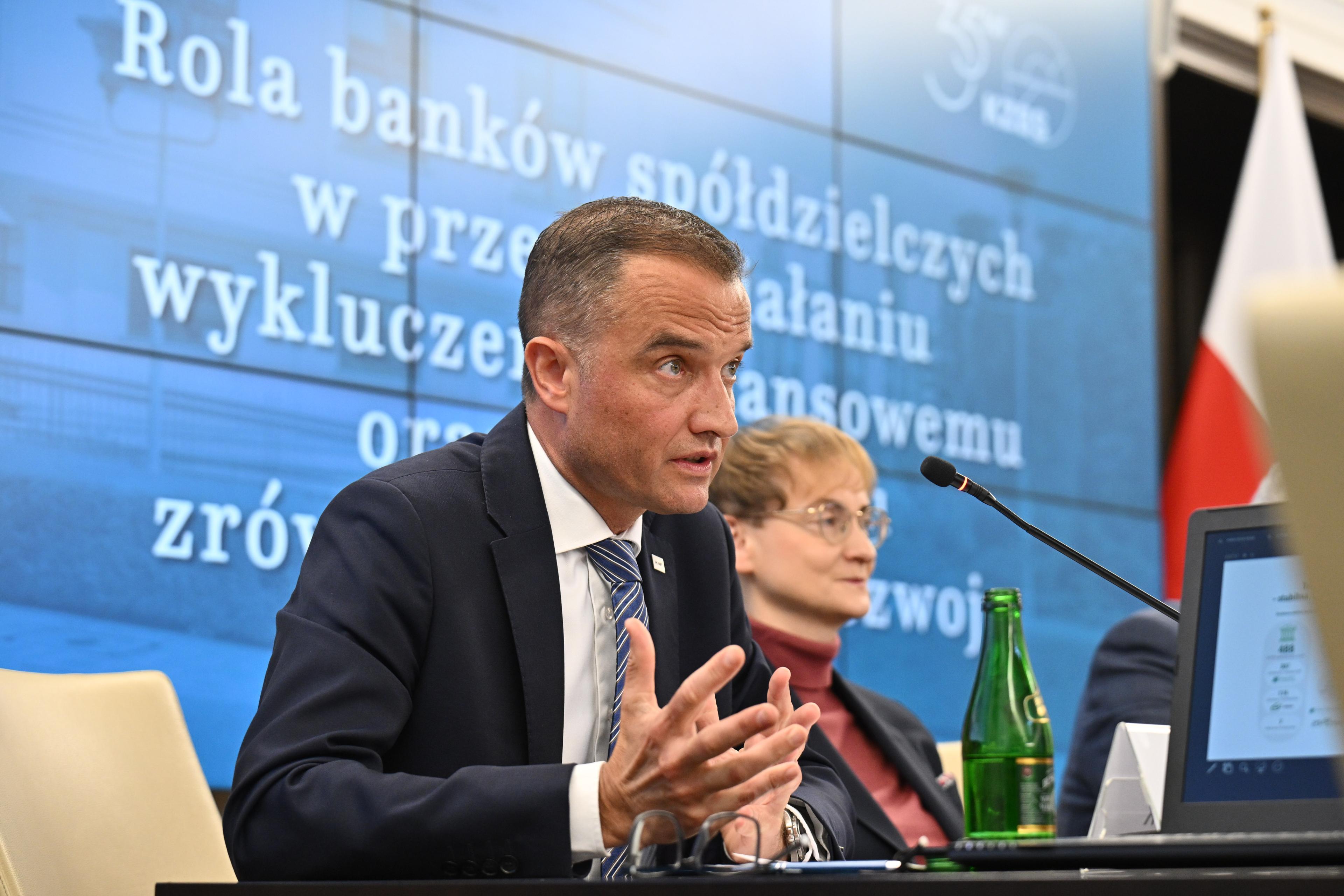
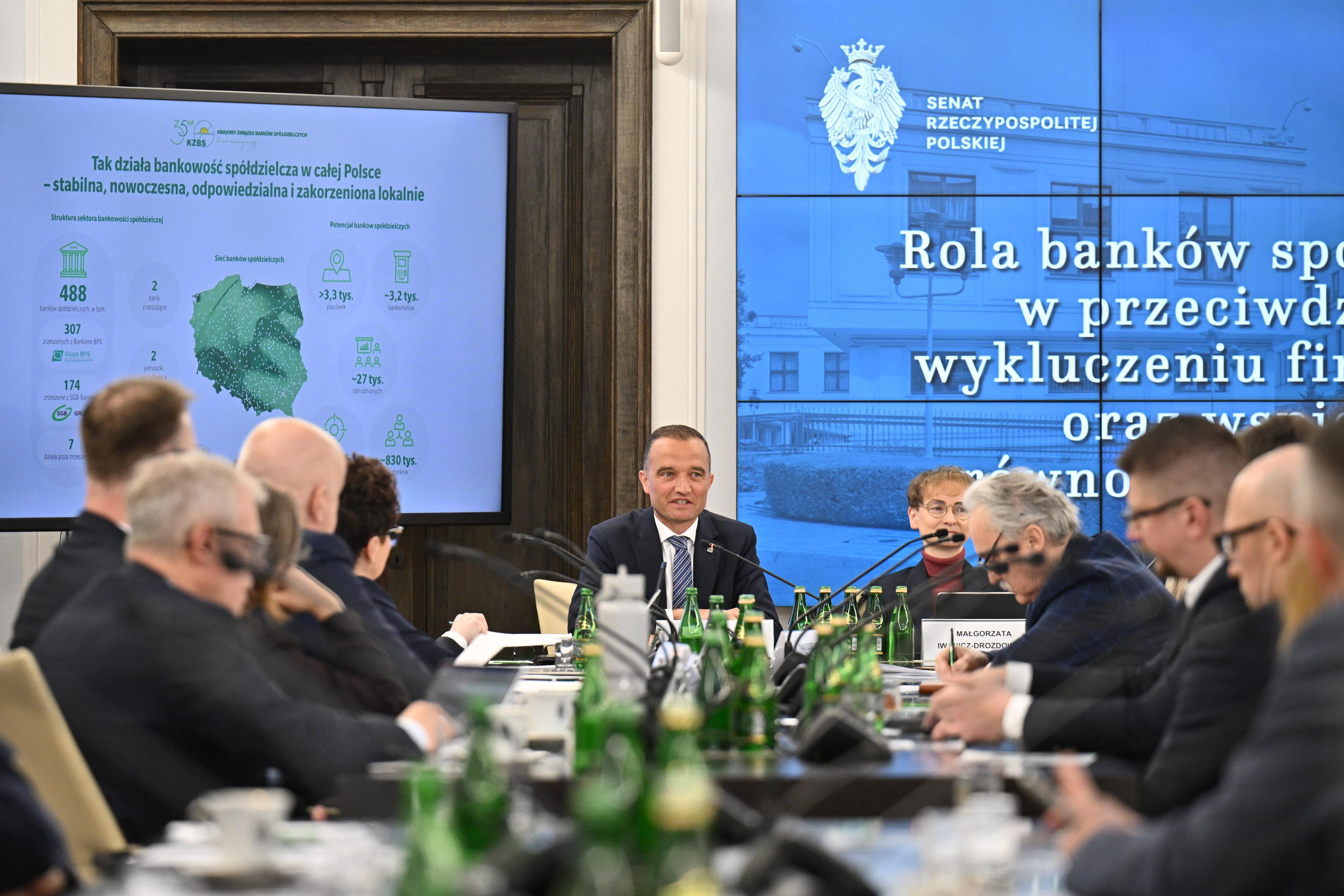
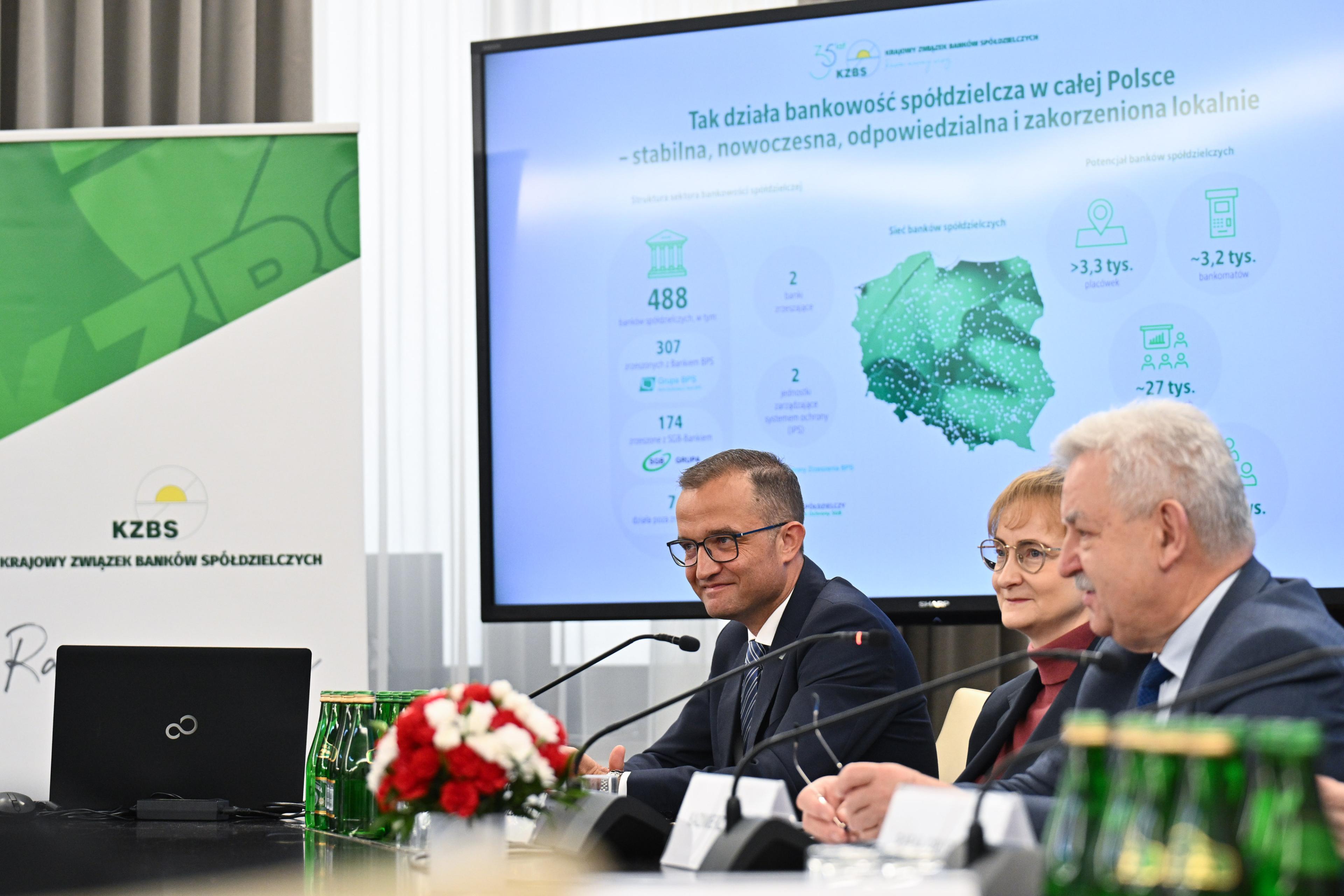
Marcin Mikołajczyk spoke at a conference on the role of cooperative banks
Marcin Mikołajczyk, Deputy Chair of the KNF, spoke as a special guest at the conference ‘Role of cooperative banks in counteracting financial exclusion and supporting sustainable development’. The conference, held in the building of the Senate of the Republic of Poland, was organised by the Budget and Public Finance Committee of the Senate of the Republic of Poland and the National Association of Cooperative Banks (KZBS).
Marcin Mikołajczyk has emphasised that the cooperative banking sector in Poland is currently in a good financial situation, which – from the supervisory perspective – is a solid foundation for its further development. Cooperative banks are characterised by high capitalisation, safe liquidity position, and satisfactory quality of assets. The sector’s entities closed the previous year with record high profits. What really matters, however, is not the financial result as such but the manner in which it is used. From the perspective of the system’s stability, it is crucial to strengthen security, in particular in technological area and by expanding resources of institutional protection systems.
The Deputy Chair of the KNF added that the capital situation of cooperative banks remains very good, while such a strong capital base creates safe conditions for the development of lending activity in the years to come. Cooperative banks play a significant role in financing the private sector, local government units, farmers, as well as micro-, small- and medium-sized enterprises.
Particularly important is also the role of cooperative banks in counteracting financial exclusion. The issue has serious social and economic consequences. Limited access to financial services may stem both from infrastructural barriers and lack of digital skills. Cooperative banks, present in smaller towns and communes, are often the only physical channel of access to basic banking services. Financial inclusivity means not only access to an account or a loan but also financial education, consumer protection, and tailoring products to clients’ actual needs.
Marcin Mikołajczyk assessed that cooperative banks are also essential in the process of supporting sustainable development. Their local presence makes it possible to correctly identify needs of the community and effectively support local entrepreneurship and social initiatives. In the context of the state’s economic transition, the sector may provide financing to where it is needed the most, in particular in cooperation with local government units. A stable financial situation is conducive to taking such actions.
At the same time, the sector of cooperative banking is facing several regulatory and market challenges. One of them is the implementation of the CCD2 directive, as well as the implementation of the AML package in response to the growing threats related to money laundering and terrorist financing. Progressing digitalisation of financial services requires greater technological maturity and reinforcement of safeguards against cyber threats. Another element of the backdrop is the final stage of implementing Basel III regulations and the continuation of the benchmark reform, including a gradual departure from the WIBOR benchmark.
The Deputy Chair of the KNF indicated in his summary that given those challenges, the role of the financial supervisory authority is not limited exclusively to the oversight function. The KNF supports the financial sector, including the sector of cooperative banking, in building a safe and stable ‘ecosystem’ and co-creating its resilience and modernity. The goal of joint actions is the cooperative banking that will remain safe and stable, but also capable to finance the aspirations and development of the Polish economy by combining a traditional social mission with modern technological solutions.