Multimedia - Komisja Nadzoru Finansowego

COMMUNICATION
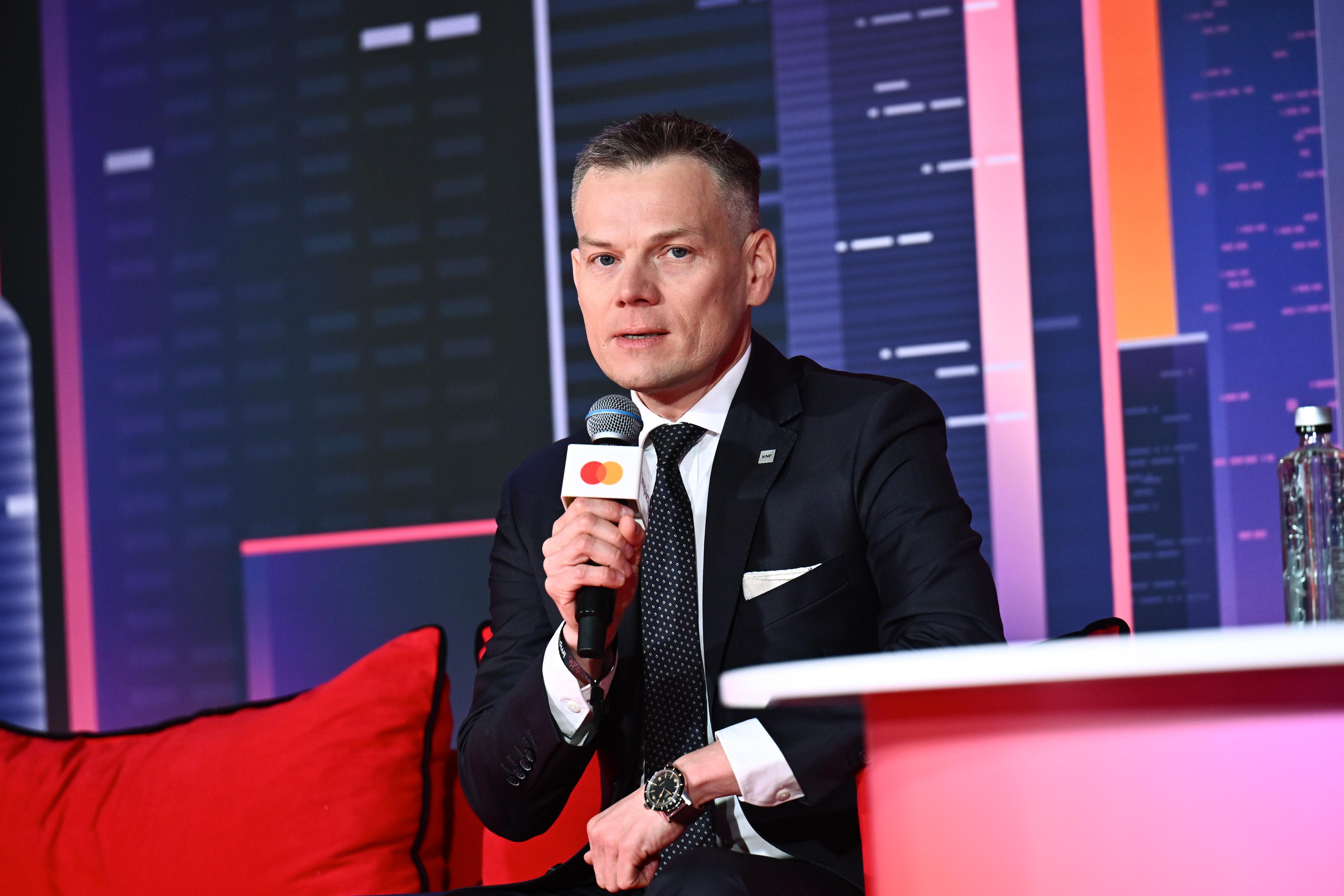
Jacek Jastrzębski spoke at Impact’26
Jacek Jastrzębski – Chair of the KNF, took part in a fireside chat at Impact’26. The talk titled ‘Financial sector as a pillar of state security in the era of hybrid activities and uncertainty’ was hosted by Mikołaj Kunica, Editor-in-Chief of Business Insider Polska.
‘Our agency stems mainly from the fact that we managed to create space for cooperation both with other public institutions and with the financial sector itself, where fast flow of information and prevention of negative spillovers in the financial sector is the predominant value,’ Jacek Jastrzębski said during the fireside chat.
The talk focused on to what extent digital security had become one of the foundations of stability for the state and the financial market. Effective cybersecurity results mainly from building cooperation and confidence among the supervisory authority, other public institutions, and the financial sector. The UKNF has been developing its competences and the environment for exchange of information about risks and vulnerabilities in the financial sector since 2019, as fast transfer of knowledge has been deemed more important than sanctions against institutions reporting their vulnerabilities. Thanks to this approach, it is possible to contain the risk of threats being spread across the whole sector.
Jacek Jastrzębski emphasised that the financial sector had become an element of the state’s critical infrastructure and a pillar of state security. Today, access to e-banking does not mean only access to cash but also to a number of public services. For this reason, the importance of banking channel security goes beyond the financial sector itself and directly affects the sense of security among citizens. The experiences of the pandemic and the first days following Russia’s aggression against Ukraine also showed that the level of the society’s confidence in banks remained high.
As underlined by the Chair of the KNF, evolution of financial supervision itself is an important topic. Modern supervision cannot be limited to regulations understood in their traditional sense or prudential requirements. Indeed, new risks related to cybersecurity and geopolitical tensions are emerging. He has pointed out that some cyberattacks are of ‘commercial’ nature but some of them are inspired by hostile regimes, which makes cybersecurity an element of national security.
Jacek Jastrzębski highlighted the importance of ‘cyber hygiene’ and social education. As the level of systemic safeguards improves, cybercriminals increasingly use social engineering and exploit human vulnerabilities because an attack against a user is easier, more effective, and cheaper than an attack on technological infrastructure. The Chair of the KNF emphasised that even the best efforts of public institutions would not eliminate all the risks. Thus, it is becoming of key importance to build users’ resilience through raising awareness of risks and making them capable of recognising ‘red flags’.
He also added that education in this field should be started already in early years. It is about building lasting habits and automatic reactions that resemble ‘muscle memory’ in order to increase resilience against manipulation and digital fraud.