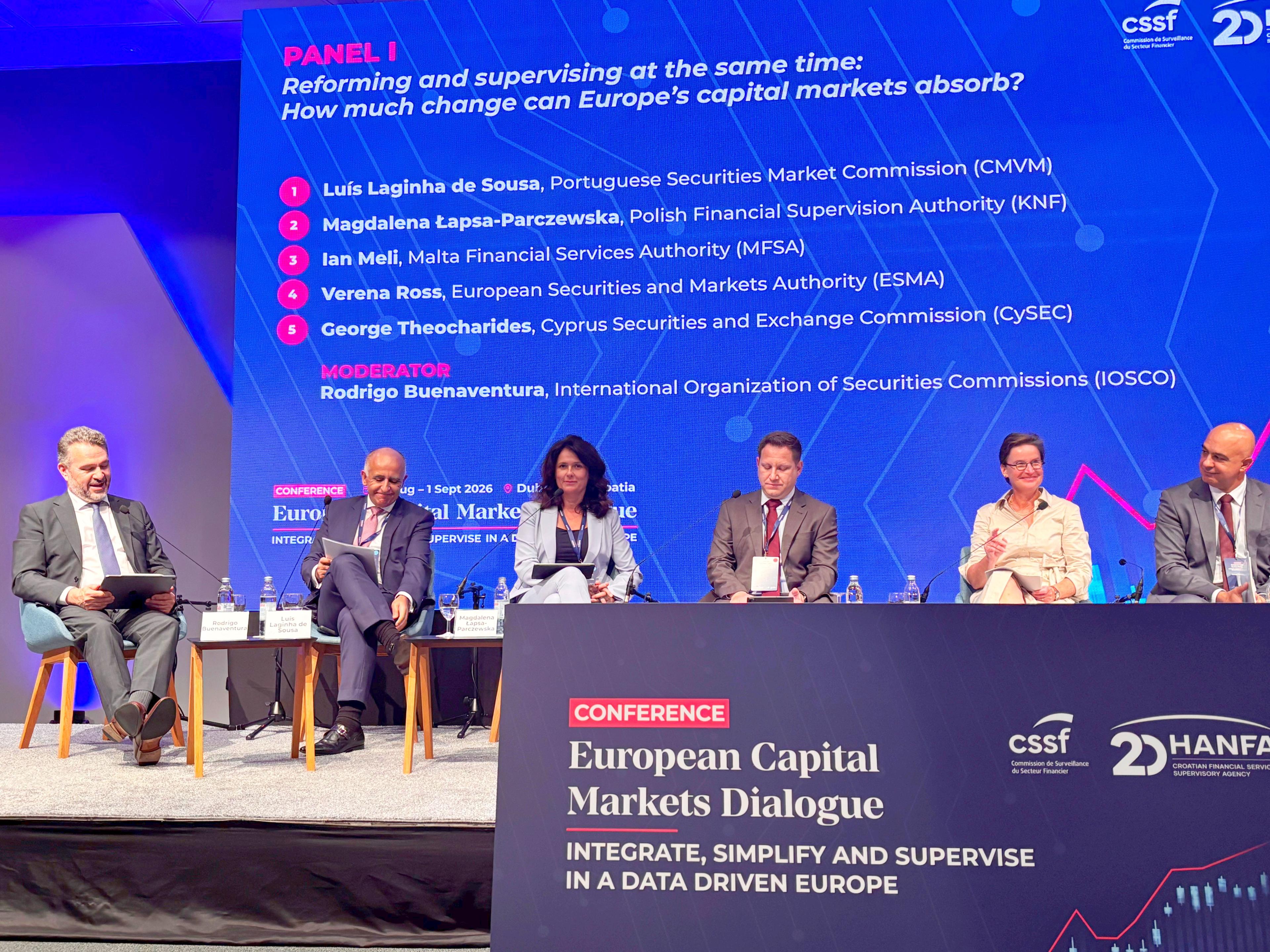
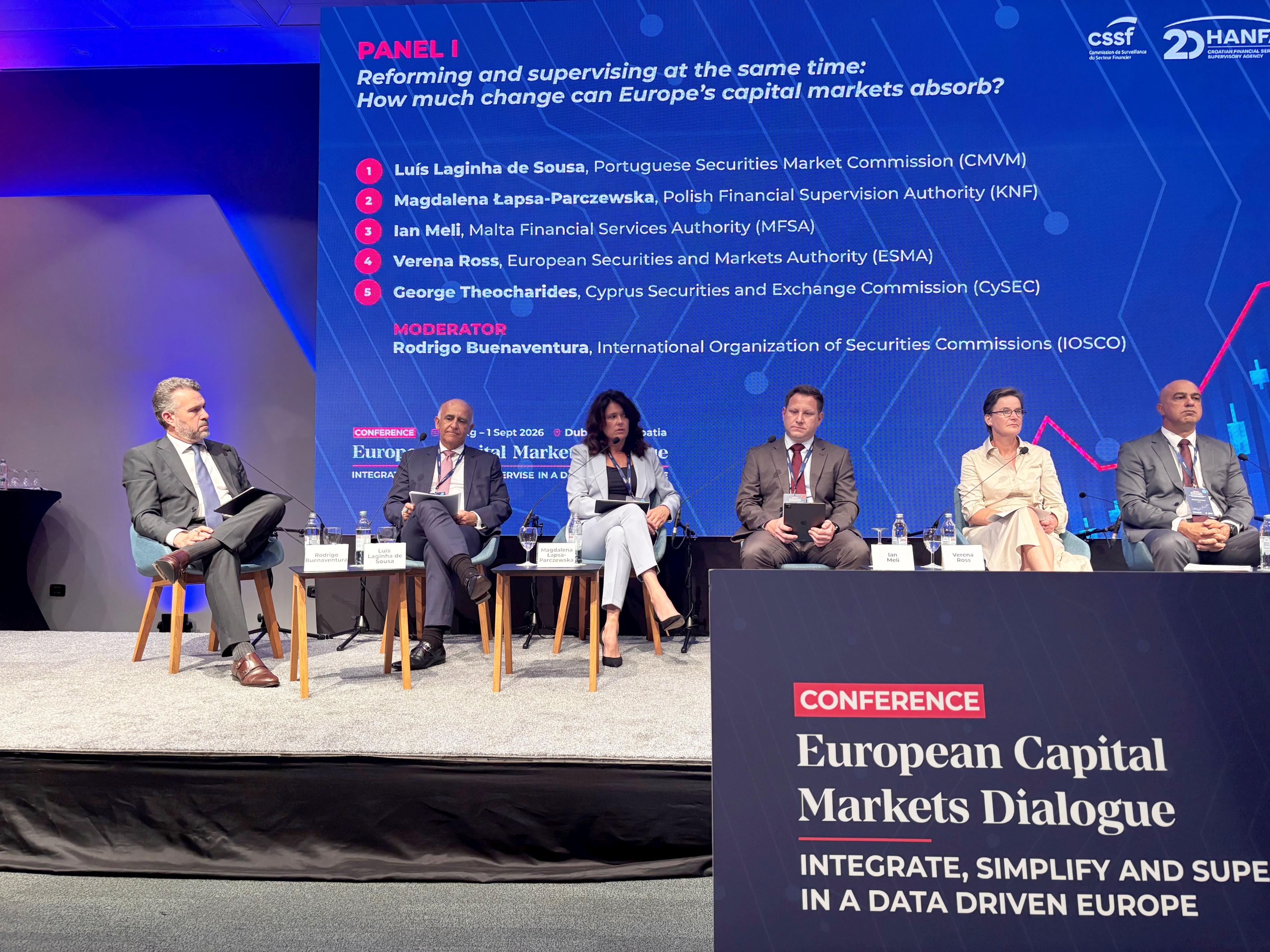
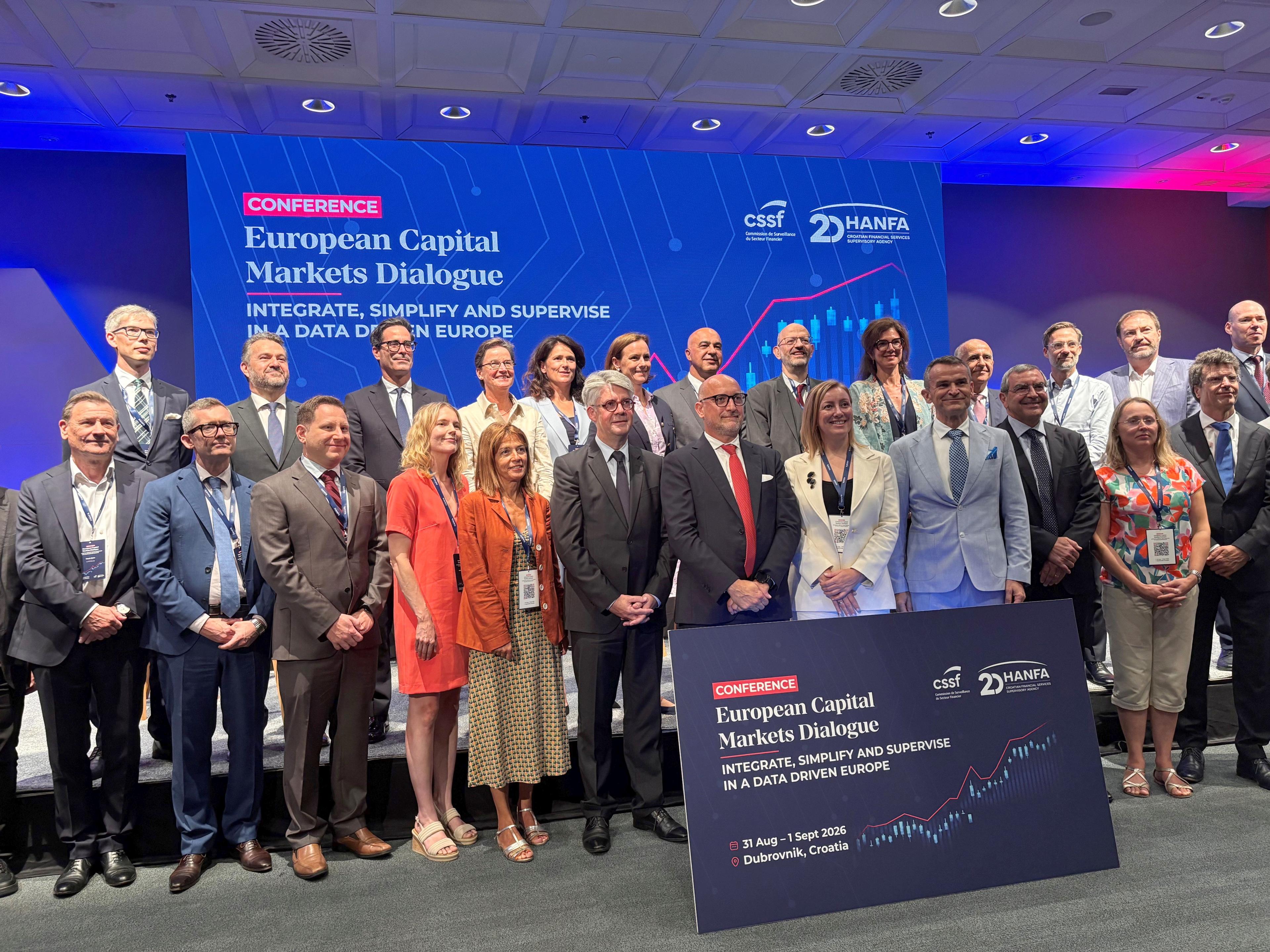
Magdalena Łapsa-Parczewska spoke at a panel during European Capital Markets Dialogue
Magdalena Łapsa-Parczewska, Managing Director for Capital Market Supervision at the UKNF, joined the panel discussion ‘Reforming and supervising at the same time: How much change can Europe’s capital markets absorb?’ as part of a conference titled ‘European Capital Markets Dialogue: Integrate, Simplify and Supervise in a Data Driven Europe’, organised by the Croatian and Luxembourgian supervisors.
Other panellists included: Verena Ross, Chair of the European Securities and Markets Authority (ESMA), Luís Laginha de Sousa, Chair of the Management Board of the Portuguese Securities Market Commission (CMVM), George Theocharides, Chair of the Cyprus Securities and Exchange Commission (CySEC), and Ian Meli, Head of Investment Services Supervision at the Malta Financial Services Authority (MFSA). The panel was moderated by Rodrigo Buenaventura, Secretary General of the International Organization of Securities Commissions (IOSCO).
The discussion focused on the review of deep structural changes in the European capital sector. The panellists analysed the synergy between new packages of legislation, the reform of supervisory institutions, and the progressing technologisation of markets. The analysis also covered the scale and real opportunities for the implementation of current regulatory reforms (including initiatives such as SIU, RIS, or MISP) and the operational practicality of those rules for market entities. The speakers addressed the consequences of the centralisation of supervisory powers by assessing the resources necessary to complete the reform.
Magdalena Łapsa-Parczewska highlighted a positive trend observed currently in the process of creating and modifying Level 1 acts, namely a greater balance in complementing the acts at Level 2, i.e. in the form of regulatory and implementing technical standards. This promotes a stable legal environment which allows entities to focus on growth and does not deplete the limited supervisory resources at the EU and national levels. She added that the current regulatory and supervisory reforms could not work if they were disconnected from the market reality. Successful implementation of the reforms depends on the flexibility of rules in relation to grassroot development, the innovativeness and technologisation of markets and on financial institutions being allowed appropriate time for adaptation.
She also emphasised that the scope of supervision that was to be transferred from the local level to the European level – according to the proposal made by the European Commission in the Market Integration and Supervision Package (MISP) – should be eventually decided at the political level as soon as possible. This will allow ESMA and the national authorities to prepare themselves well for a smooth transfer of powers. She added that the centralisation of supervisory structures at the EU level must be complete, so that the EU supervisor would assume full responsibility for its actions, without the risk of blurred boundaries in decision-making.