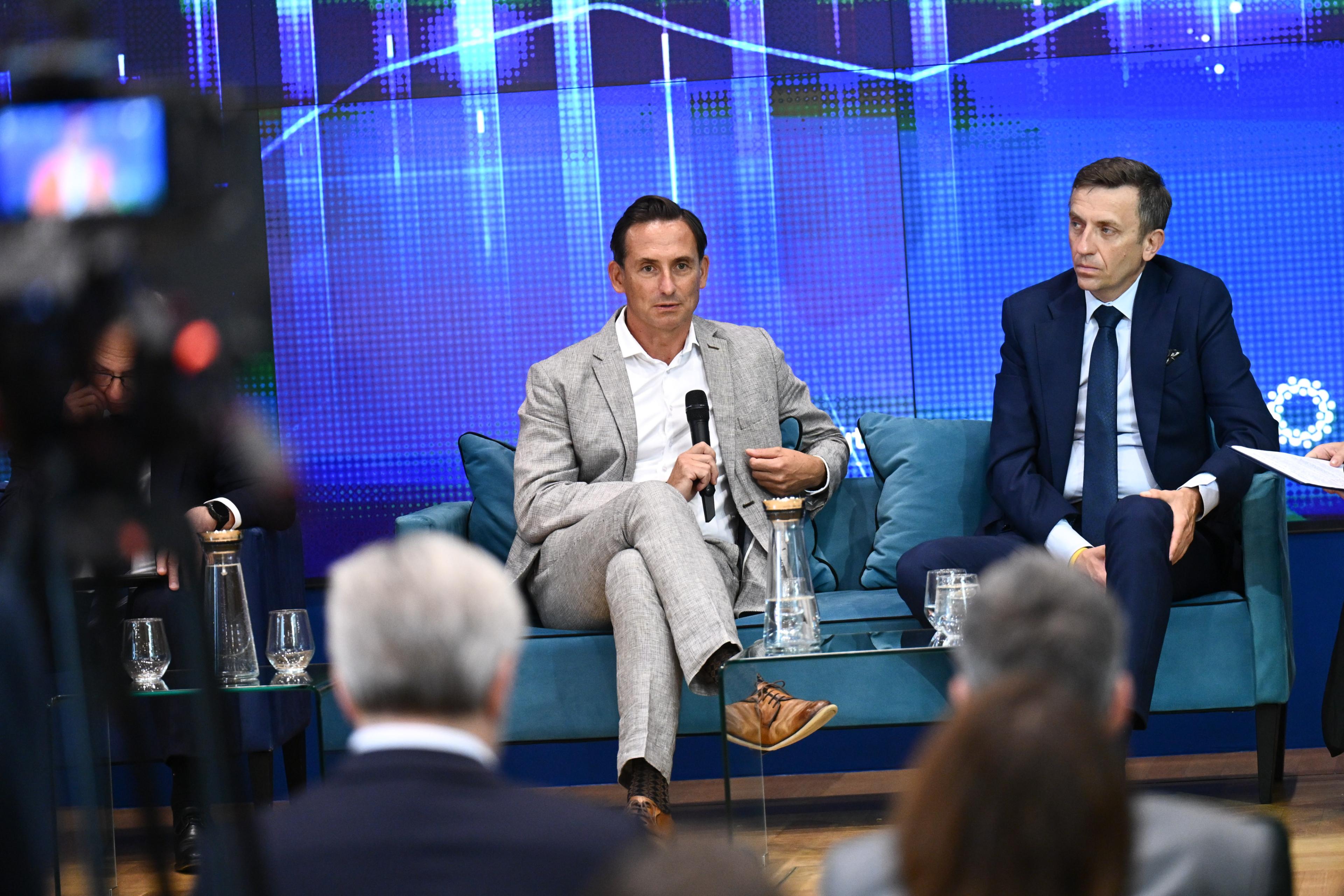
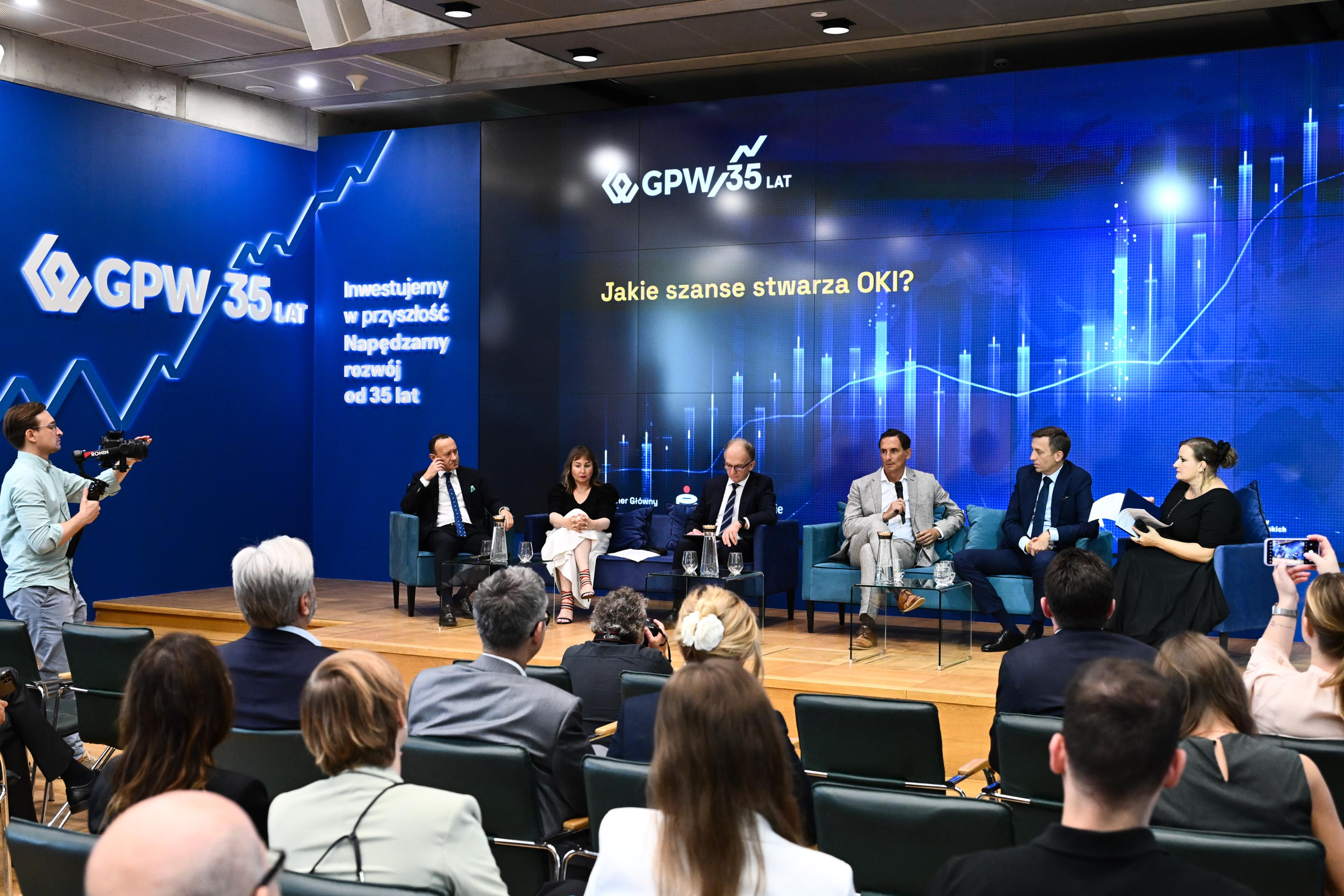
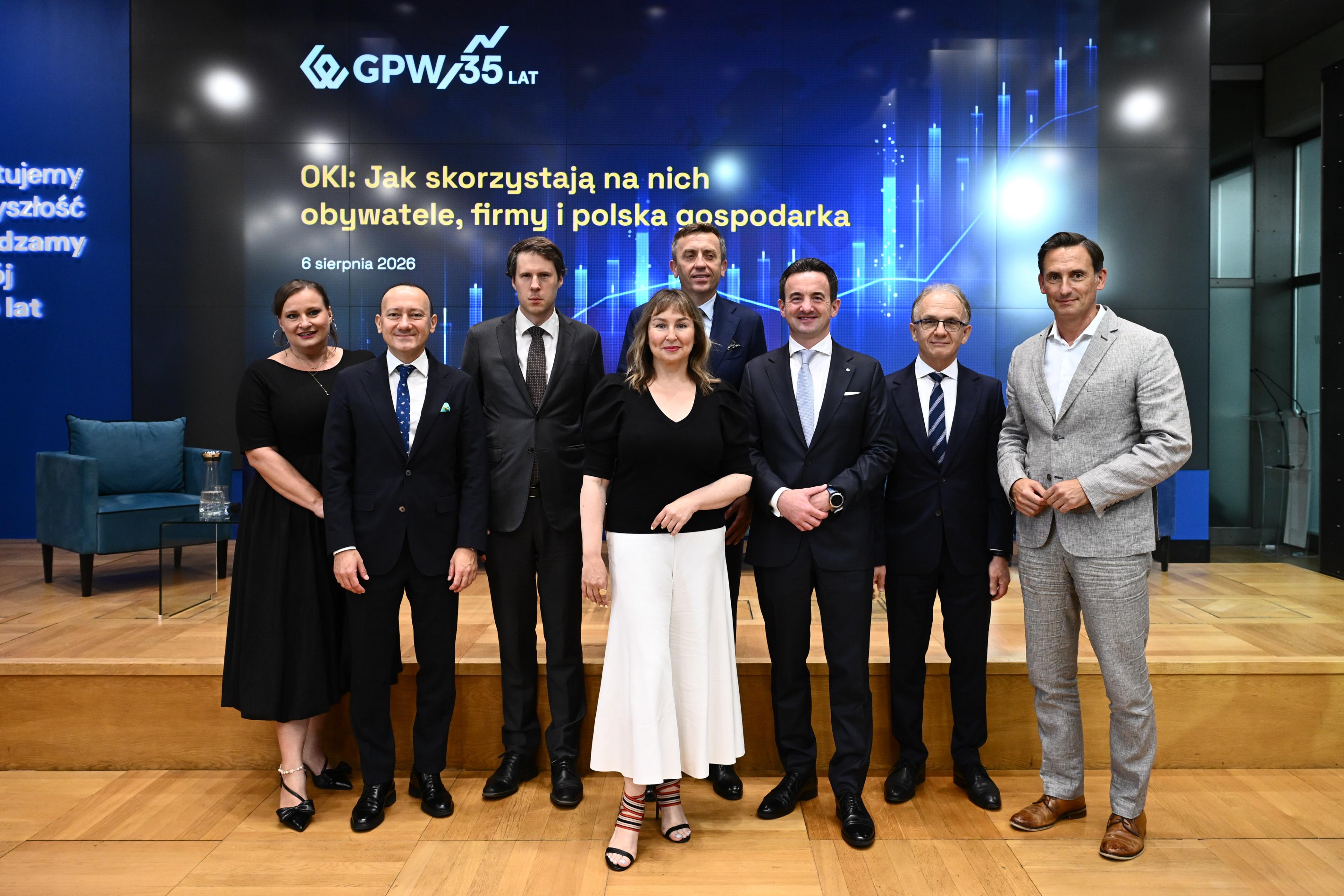
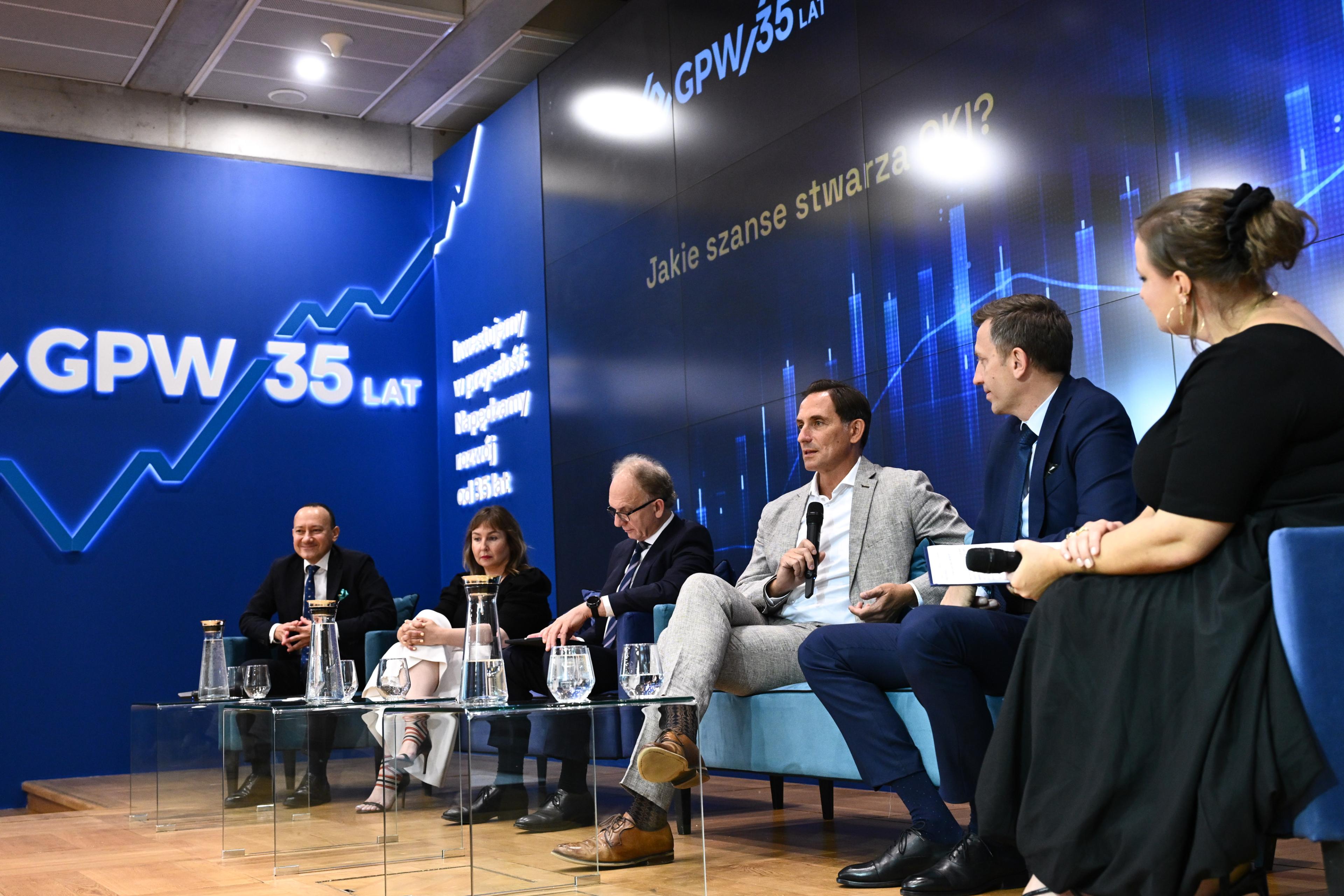
Dariusz Adamski spoke at debate ‘What are the opportunities created by Personal Investment Accounts?’ at Warsaw Stock Exchange
Dariusz Adamski, Deputy Chair of the KNF, took part in a discussion of capital market leaders titled ‘What are the opportunities created by Personal Investment Accounts?’ and held during a conference organised by Warsaw Stock Exchange.
According to Dariusz Adamski, Personal Investment Accounts (OKI) are one of the best solutions in terms of modification of capital gains tax. The success of the project, however, will depend not only on the product design as such but also on market conditions, appropriate communication, and realistic expectations as to the effects of the project.
Dariusz Adamski indicated that the success of a similar instrument in Sweden had been, to a large extent, a consequence of the convenient timing of its introduction: it was after the financial crisis, at the beginning of a long period of market growth. He referred to the fact that Poland would launch OKIs in different market conditions, after several years of the bull market, thus increasing the risk of investors’ disappointment if prices of assets are adjusted. In his opinion, it is, therefore, necessary to communicate the risk of market volatility responsibly when promoting the new product. The aim should be to achieve a gradual increase in the number of accounts and in the clients’ investment profile over many years, not a short-term enthusiasm in exchange for disappointment experienced later, after a more significant market adjustment.
He added that, as in the case of the Swedish ISK, OKIs should not be treated as the foundation of the capital market but as an instrument complementing the existing solutions. The Deputy Chair of the KNF emphasised that continued development of the market requires, above all, strong, broad pension programmes that would ensure a stable inflow of ‘patient’ long-term capital.
He also pointed to economic conditions of Polish households. Relatively low manageable income causes a significant part of households’ savings to remain constantly liquid, which limits the scale of long-term investments. Therefore, any moderate popularity of the equity-like component of OKIs in the first years of its functioning should not be interpreted as failure of this project but as a natural adaptation of the instrument to the economic reality.
Dariusz Adamski also pointed to the need for simplification of investment process. The existing solutions on MiFID surveys and product governance are interpreted in a manner that makes it more difficult for clients to start investing, without improving the level of protection. He also announced legislative changes aimed at departing from the formalistic approach towards better recognition of realistic investment objectives of clients in the case of non-complex financial instruments. He emphasised that in the case of model portfolios, adequacy assessment should cover the entire portfolio, not specific instruments.
He also emphasised the need for improving the availability of basic support for beginner investors. He announced changes of legislation to allow the staff of banks and investment firms to provide broader client support through preparing financial plans, while keeping the line between providing information and investment advisory services. He also emphasised that educational activities cannot replace the activity of financial institutions as such, which should, in his opinion, invest more in the marketing and promotion of long-term investing instruments.