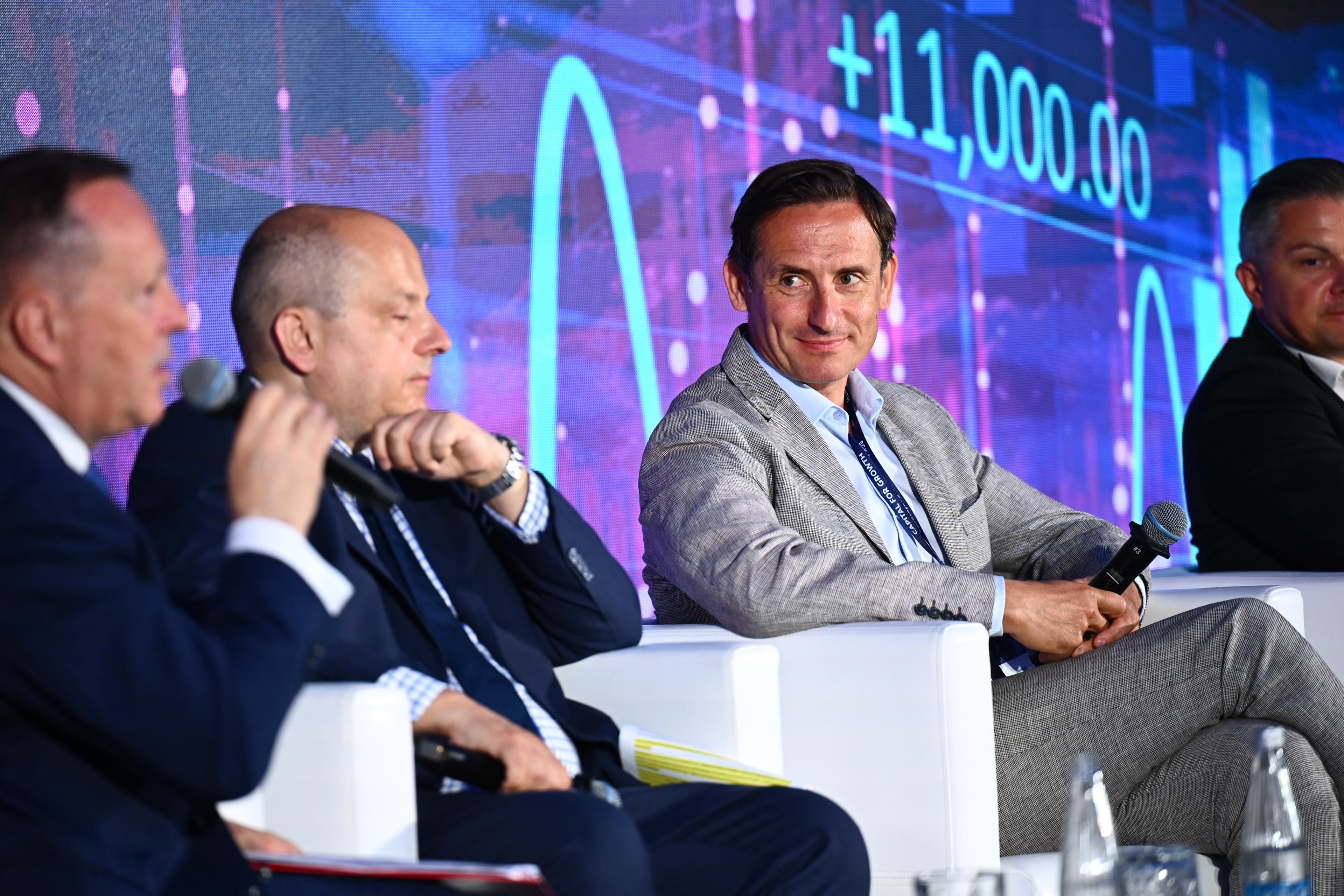
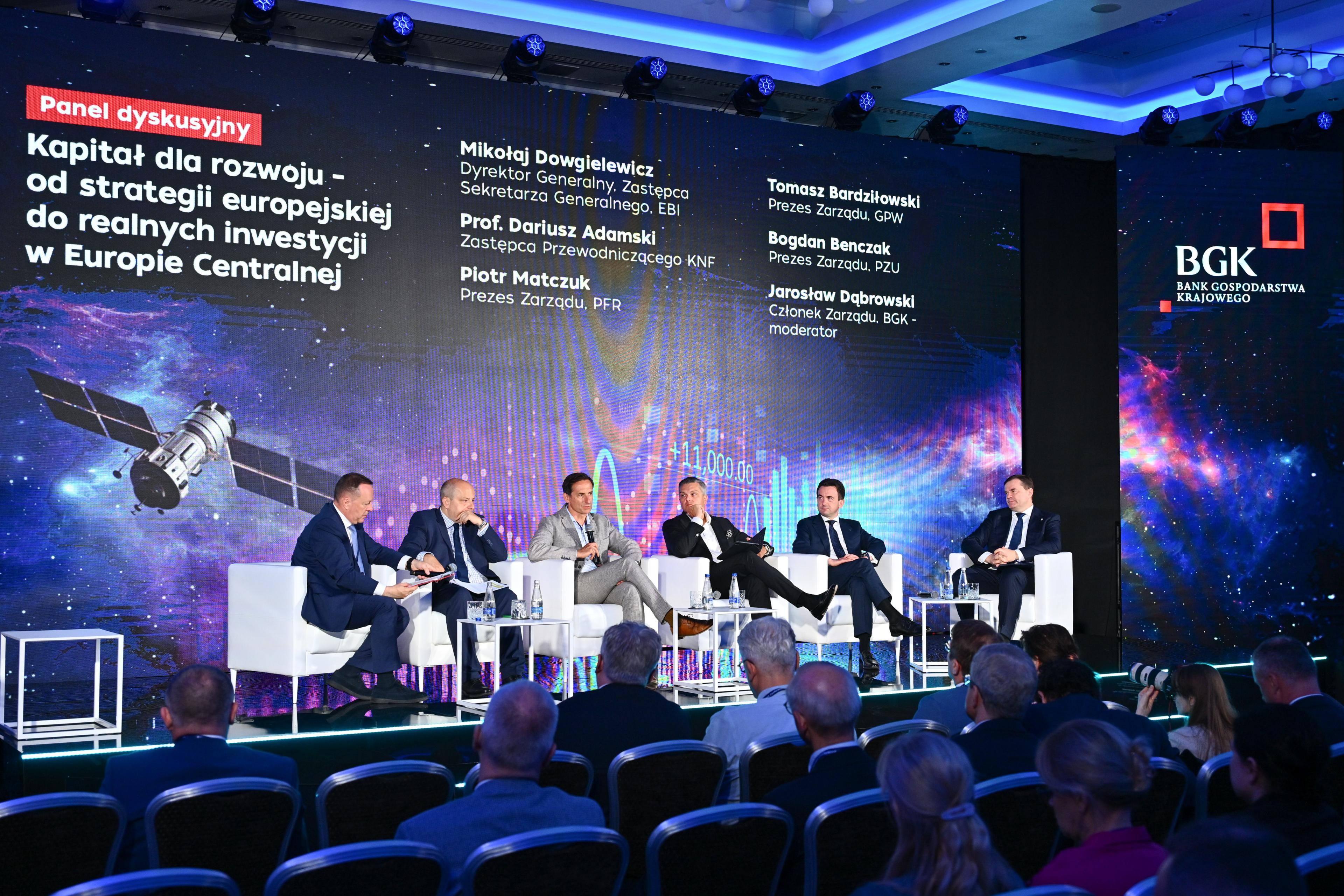
Dariusz Adamski spoke at ‘Capital for growth: BGK Investment Conference’
Dariusz Adamski, Deputy Chair of the KNF, took part in a panel titled ‘Capital for growth: from the European strategy to real investments in Central Europe’ during ‘Capital for growth: BGK Investment Conference’.
In his speech, he referred to barriers that limited investments and to activities that might make institutional investors more involved in financing the economy’s development.
As he emphasised, the situation differed depending on the sector, be it the banking sector, the insurance sector or the pension funds sector.
In reference to insurance undertakings, he highlighted that it was no longer regulatory constraints that created a barrier; the barrier was formed by high yields of treasury bonds that had reduced the appeal of investing in alternative asset classes. In the opinion of Dariusz Adamski, accessibility of safe instruments offering relatively high return rates makes more conservative financial institutions, such as insurers, less motivated to build competencies necessary to engage their capital in investments that are the most supportive for the development of the economy.
It is the same barrier that significantly reduces banks’ interest in this asset class. Another major problem is the banking tax, which rewards the purchase of treasury bonds, while penalising, for example, productive investments in the private-equity market.
The UKNF is in dialogue with organisers of the Innovate Poland programme so that capital requirements applicable to investments carried out as part of that programme are not disproportionately excessive. According to the UKNF, however, it would be most reasonable to implement such projects as ‘legislative programmes’ within the meaning of the EU regulation on capital requirements to eliminate, to the fullest extent possible, barriers that hamper banks’ investments in the private-equity market.
In the context of pension funds, the Deputy Chair of the KNF said that the current legal framework, in practice, prevented open pension funds (OFE) and employee capital plans (PPK) from investing in private-equity market assets. This will, however, change soon, after the adoption of the latest proposal amending the Ac t on investment funds, currently pending approval, which will provide for more flexibility in terms of investment policies for both types of pension funds.
The Deputy Chair also announced that after the legislative work on the amending act was completed, the UKNF would initiate dialogue with the OFE and PPK sector in order to develop a model for investing in alternative asset classes, which should allow for appropriate risk management and building essential competencies on the part of investors.
Mr Adamski closed his speech by mentioning the importance of an appropriate approach to risk management. As he emphasised, the financial sector should not avoid business risks but manage them aptly because, as he said, ‘aversion to risk is not conducive to the development of the market or individual institutions. Smart risk management, even if inherently involving the risk of mistakes, supports accumulation of experience and knowledge, and therefore contributes to development, both at the level of individuals and firms as well as the entire market and the economy.’