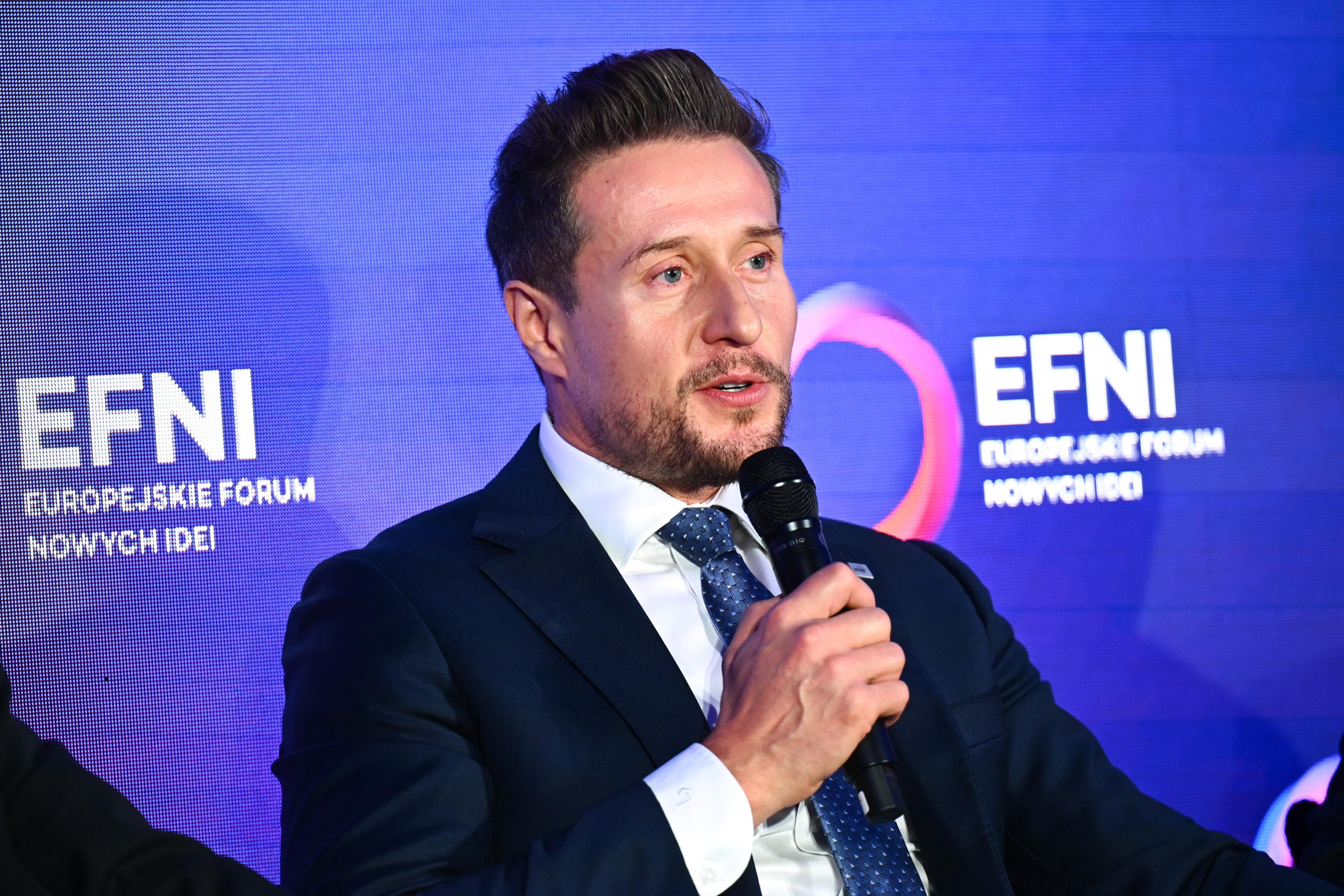
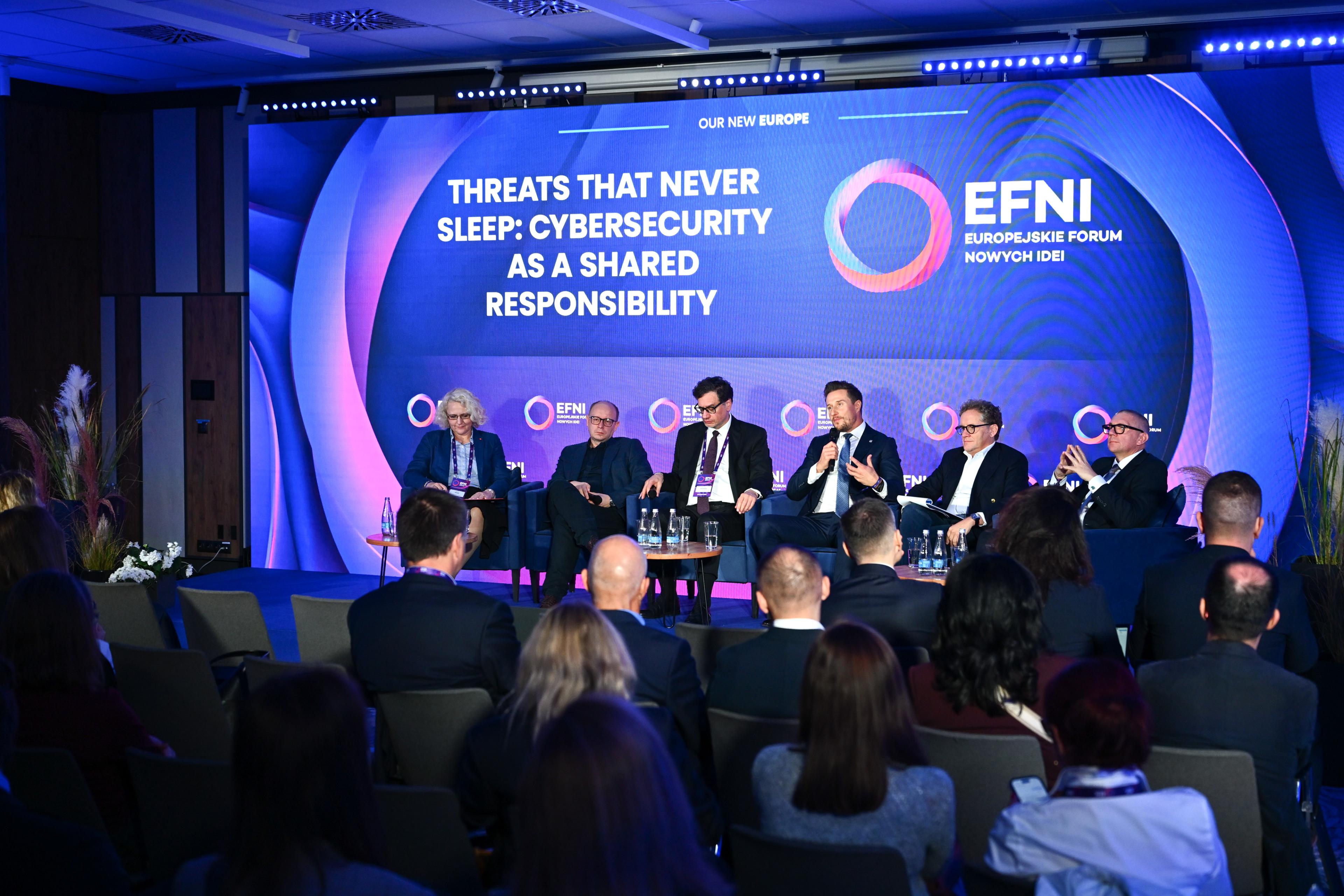
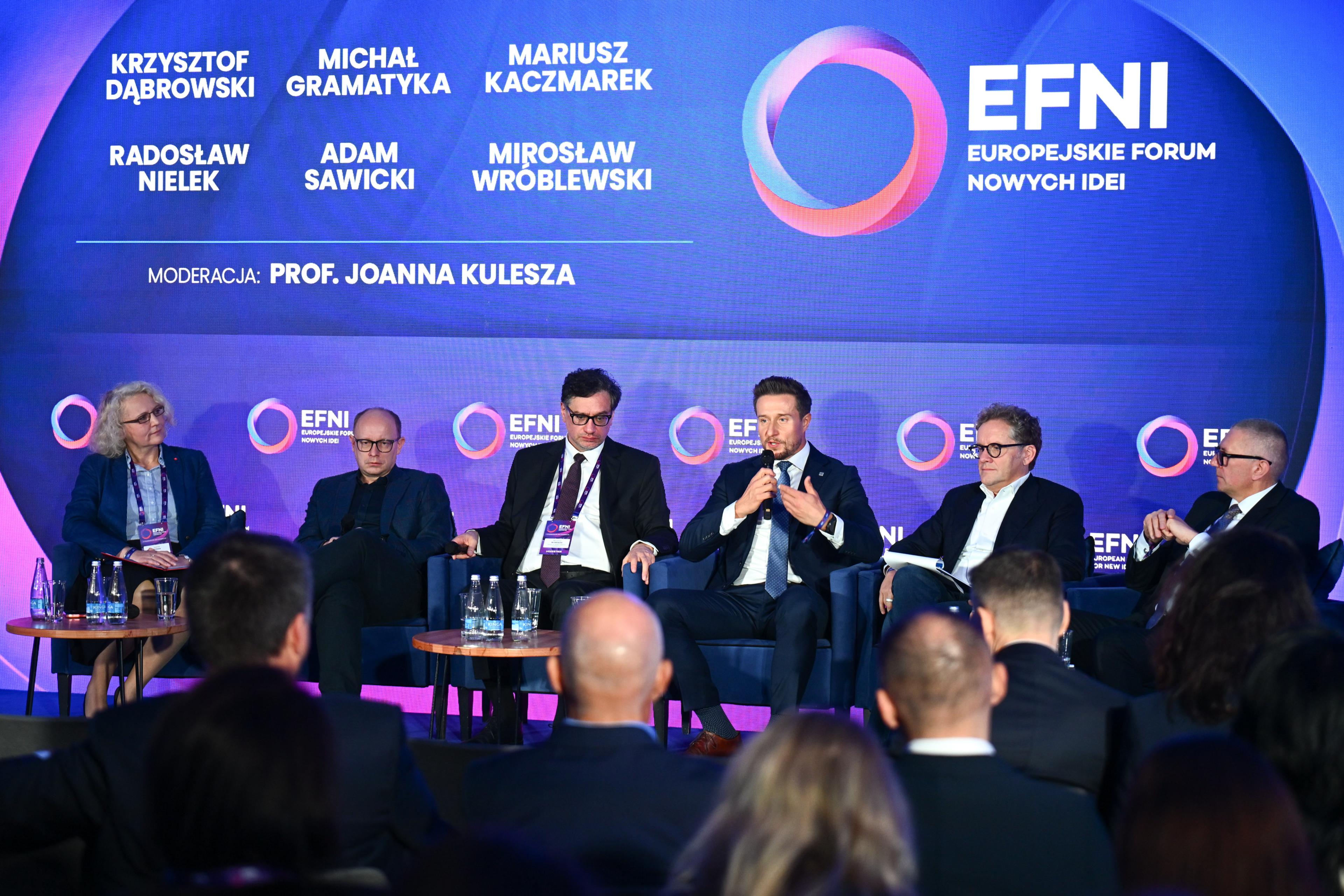
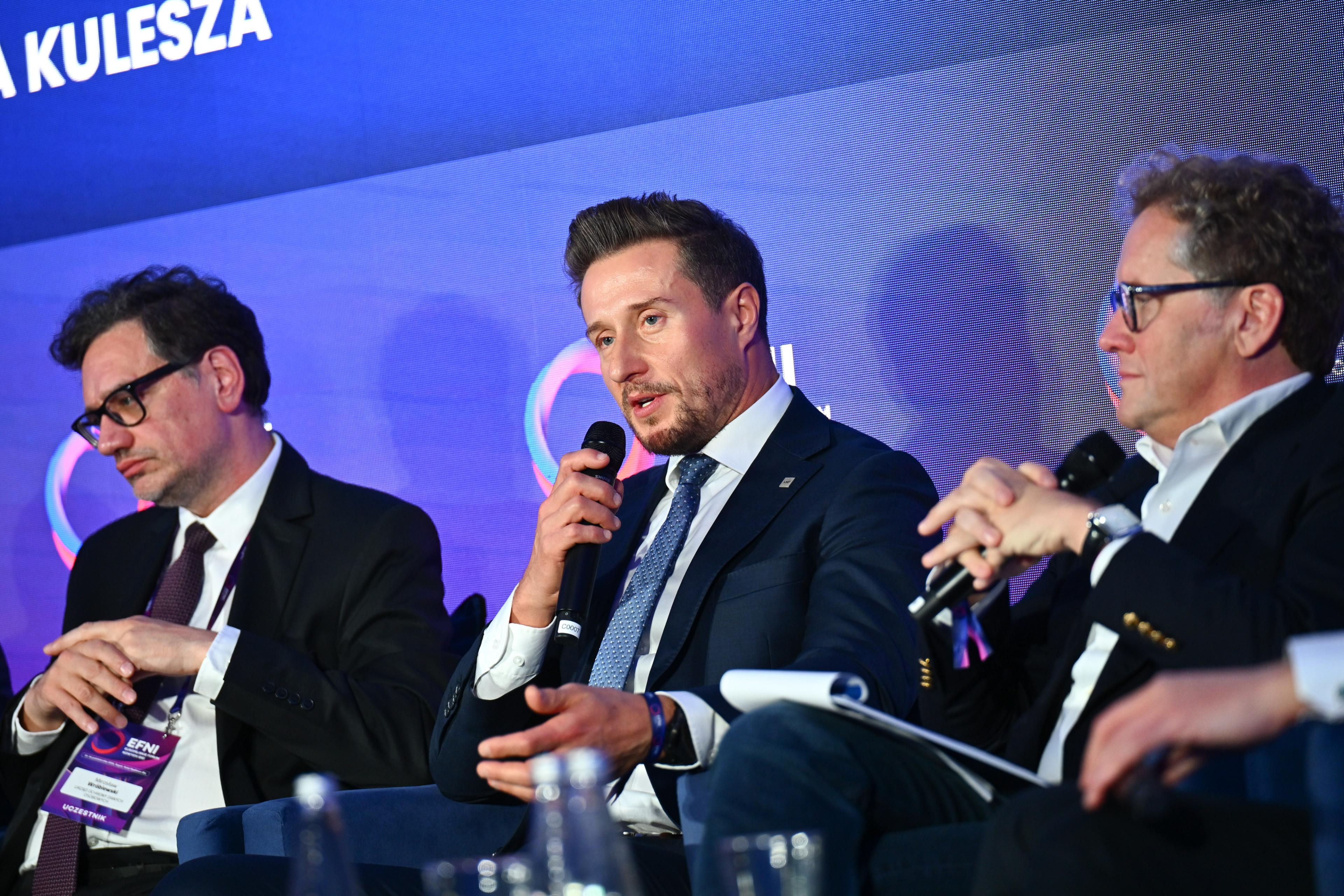
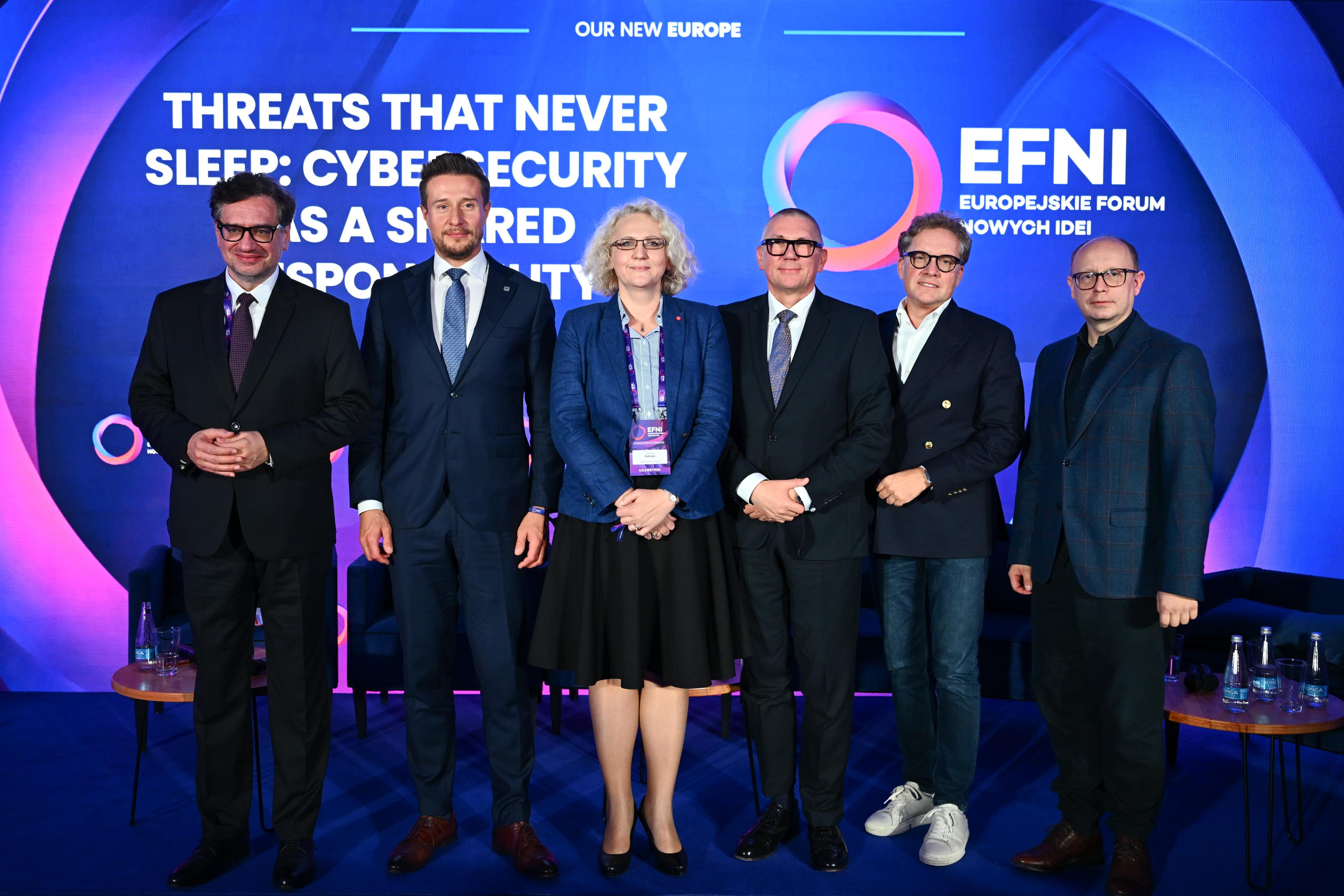
Krzysztof Dąbrowski spoke at panel on cybersecurity at EFNI 2026
Krzysztof Dąbrowski, Managing Director of the Security Division at the UKNF, took part in the panel ‘Threats that never sleep: cybersecurity as a shared responsibility’, held on 16 October 2026 during the European Forum for New Ideas (EFNI) in Sopot.
The discussion concerned growing digital threats, methods of enhancing cybersecurity and shared responsibility of the state, businesses and citizens for online security, with particular focus on education, regulations and international cooperation.
Krzysztof Dąbrowski spoke about the importance of the financial sector’s resilience, the role of regulations in technological risk management and shared responsibility for cybercrime prevention. He emphasised that due to technological advancement and wide use of digital channels in customer service and internal processes, the financial sector must take special care of security and business continuity. Cybersecurity is not only a technical matter but a requirement for customer retention and for the stability of the whole market. A serious incident that leads to an operational paralysis may result in loss of credibility of the institution, and consequently, it may threaten its functioning.
Regulations, in particular DORA, which establish special requirements on digital resilience of financial entities, play an important role in building resilience. The regulations cover comprehensive ICT risk management, allocation of responsibility and ensuring appropriate resources, responding to incidents, and supervision of technology third-party service providers. Krzysztof Dąbrowski pointed to the responsibility of management boards that cannot be transferred to other entities through task delegation. Risk management should be an integral part of the functioning of an organisation at all levels.
He added that third-party risk remained one of key threats. Data reported to the sectoral Security Incident Response Team, CSIRT KNF, show that in the previous year the majority of incidents affecting financial market entities had their source outside those institutions, at vendors. This means that to achieve effective protection it is necessary to take into consideration the security of the entire supply chain, irrespective of the sector.
He positively assessed the cyber resilience of the Polish financial sector, in particular at larger entities with appropriate resources. He also emphasised the importance of cooperation among institutions, in particular in the banking sector, where cybersecurity is treated as the area of common interest, not an area of competition. The exchange of information enables faster detection of threats and response to incidents, thus reducing the risk of contagion to the entire market. He also mentioned that cybercriminals increasingly focused on financial institutions’ clients as direct attacks against well-secured entities might be more difficult and less profitable.
Krzysztof Dąbrowski emphasised the growing scale of fraud exploiting time pressure, distraction and increasingly more credible content generated with the use of AI, with such fraud being targeted at clients. Responsibility for mitigating that phenomenon should rest with financial institutions and entities that provide advertising services and content, including social platforms. It should not be distributed evenly, however, but take into account real possibilities and the impact of specific entities. It is vital to increase the control of advertising, verify advertisers and detect and remove fake content fast. Educating clients remains important but it is not enough without effective prevention measures on the side of platforms that publish such ads.